Parts 1 and 2 covered the consumer story and the hardware. Part 3 is where GTC 2026 got genuinely weird — in the best possible way.
This is the OpenClaw story. It’s the enterprise IT revolution. It’s NVIDIA going to space. It’s the self-driving cars and the humanoid robots and the Olaf from Frozen. And it ends with an AI-generated country song around a digital campfire.
Let’s go.
The OpenClaw Moment
About ninety minutes in, Huang made a comparison that landed harder than anything else in the keynote.
“Windows made personal computers possible. OpenClaw makes personal AI agents possible.”
Then: “Every company in the world needs to have an OpenClaw strategy. Just like they needed a Linux strategy, an HTML strategy, a Kubernetes strategy.”
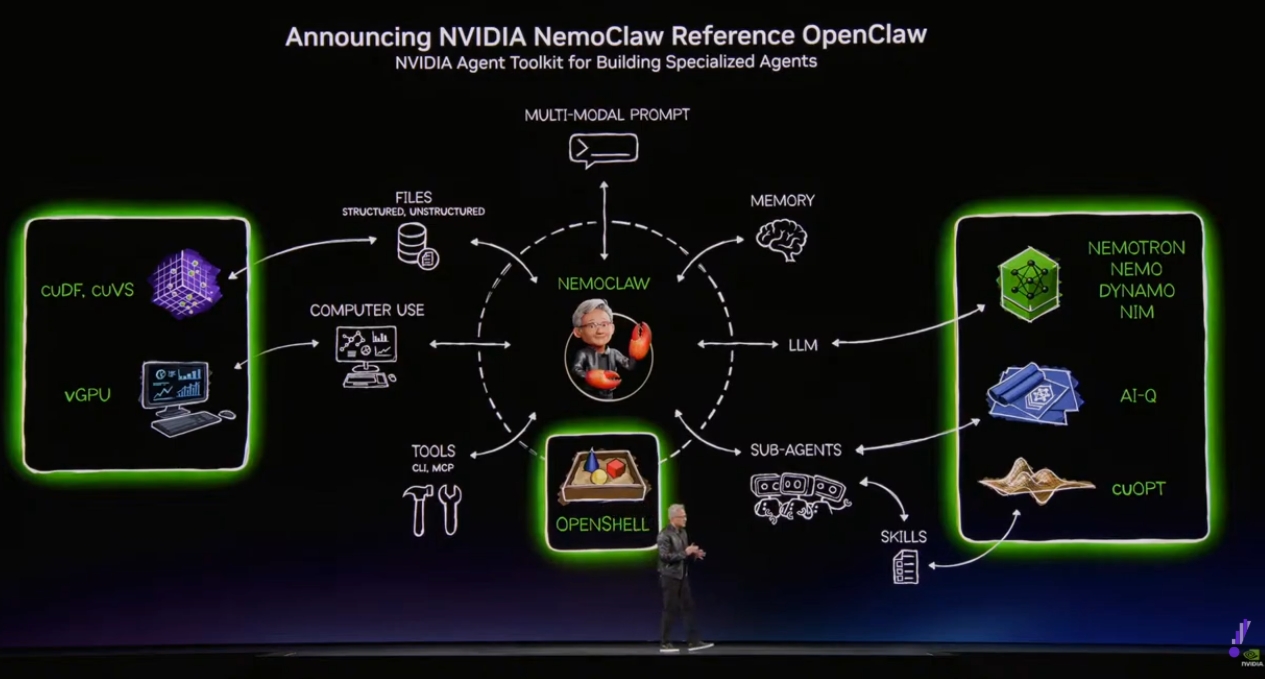
If you’re not up to speed on OpenClaw: it’s an open-source agentic AI platform built by developer Peter Steinberger. In AI, an “agent” is a system that doesn’t just answer questions — it takes actions. Manages files. Calls APIs. Breaks problems into sub-tasks. Spawns other agents to handle pieces. Runs continuously in the background without being asked. Steinberger built a framework that makes deploying these agents as simple as running a command, and it went so viral so fast that Huang called it “the most popular open-source project in human history — surpassing in weeks what Linux achieved in thirty years.”
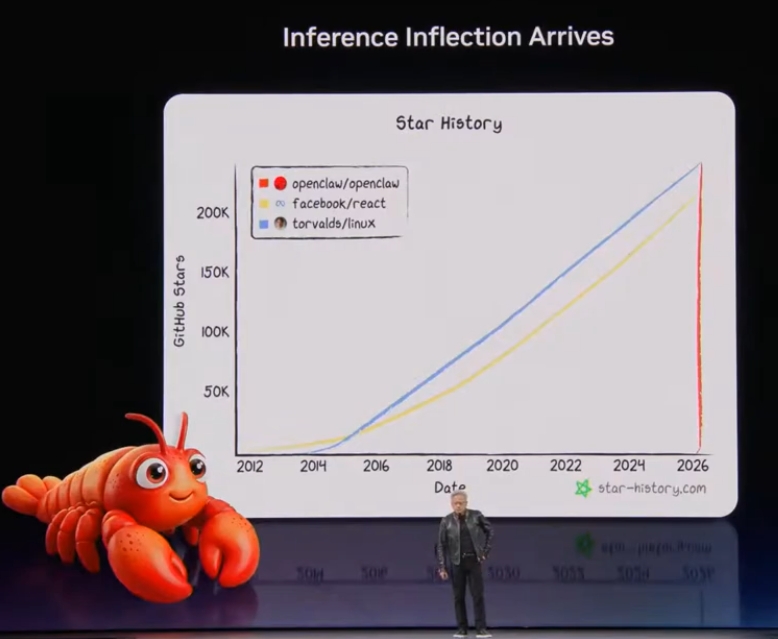
The OpenClaw system is, in Huang’s framing, an operating system for agentic computers. The same conceptual layer that Windows occupies for a personal computer — managing resources, scheduling tasks, providing the interface between the user’s intent and the hardware doing the work — OpenClaw occupies for a system where the “user” is giving high-level goals to AI agents.
“It opensourced the operating system of agentic computers,” Huang said. And then he explained what NVIDIA was going to do about it.
NemoClaw: The Enterprise Layer, and Why It’s Harder Than It Sounds
Deploying AI agents that can read files, write code, browse the web, and call external APIs is genuinely powerful. It’s also genuinely terrifying from an enterprise security perspective. An agent that can access sensitive data and make external calls is a significant liability if it’s not properly governed.
This is the problem NVIDIA’s NeMo Claw reference design solves.
NeMo Claw is an enterprise framework built on top of OpenClaw. It adds what Huang called a policy engine and a privacy router — controlling what data agents can access, where requests can go, and what actions are permitted within corporate governance boundaries. The Open Shield security layer is embedded directly into the OpenClaw runtime, not bolted on afterward.
The practical pitch: deploy AI agents that can do genuinely useful work — interacting with external services, generating code, analyzing data — without exposing sensitive information or violating compliance requirements. One install command. Works with any cloud, any model, any NVIDIA GPU.
NVIDIA’s business framing: “Every SaaS company will become an AaaS company — Agentic as a Service.” Instead of providing software tools that humans operate, they’ll provide specialized AI agents that operate the tools. “NeMo Claw can serve as the policy engine for all the SaaS companies in the world.”
And then Huang said something that stopped me mid-note:
“In the future, every engineer in our company will have an annual token budget. Their base salary might be $300,000. I will give them an additional allocation equal to roughly half their salary in tokens, so they can achieve 10x productivity. ‘How many tokens come with your offer?’ is already becoming the new hiring conversation in Silicon Valley.”
That’s not a prediction about 2030. That’s a description of something that’s already happening at NVIDIA and at leading AI-native companies. The unit of “AI resources allocated to an employee” is becoming a compensation line item alongside salary and equity.
For developers who want to experiment with local agentic AI today: NVIDIA specifically demoed NeMo Claw running on GeForce RTX laptops on the GTC show floor — not server hardware. The RTX 50 Series gaming laptops at Newegg are the exact category of machines NVIDIA’s own demos ran on. Local AI agents, no cloud subscription required.
The Nemotron Coalition: Open Models for Every Domain
To give NeMo Claw open-source models to run, Huang announced the Nemotron Coalition — a commitment of “billions of dollars” to advance AI foundation models across six specialized domains:
| Model | Domain |
|---|---|
| Nemotron | Language and reasoning |
| Cosmos | World modeling and visual AI |
| GROOT | Humanoid robotics |
| Alpamayo | Autonomous driving |
| BioNeMo | Biology and drug discovery |
| Phys-AI | AI physics and simulation |
Coalition partners include Mistral, Perplexity, Cursor, LangChain, Black Forest Labs, Reflection, Sarvam (India), and Thinking Machines (Mira Murati’s lab). Existing enterprise partners — Adobe, IBM, and dozens of others — are already integrating earlier Nemotron versions into their platforms.
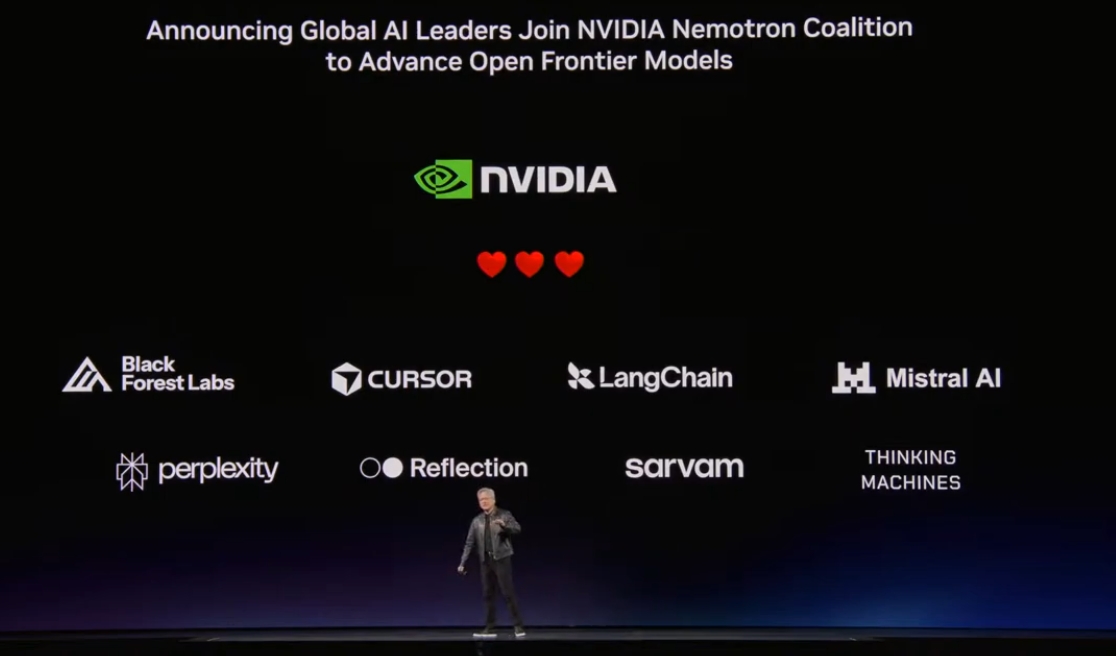
The strategic intent: give enterprises and developers a vendor-neutral, NVIDIA-optimized open model ecosystem they can run locally. No per-token API fees to a closed provider. No data leaving your environment. NVIDIA builds and maintains the models; you run them on hardware you already own.
Huang noted that Nemotron 3 is already among the top three models globally in OpenClaw benchmarks. Nemotron 3 Ultra, coming soon, is positioned as a foundation for sovereign AI — countries that want frontier AI capability without depending on American or Chinese closed model providers.
NVIDIA Is Going to Space
I want to make sure this doesn’t get lost in the robotics and OpenClaw sections because it’s genuinely remarkable.
Huang confirmed that NVIDIA has designed Vera Rubin Space-1 — a variant of the Vera Rubin system intended for deployment in orbital data centers.
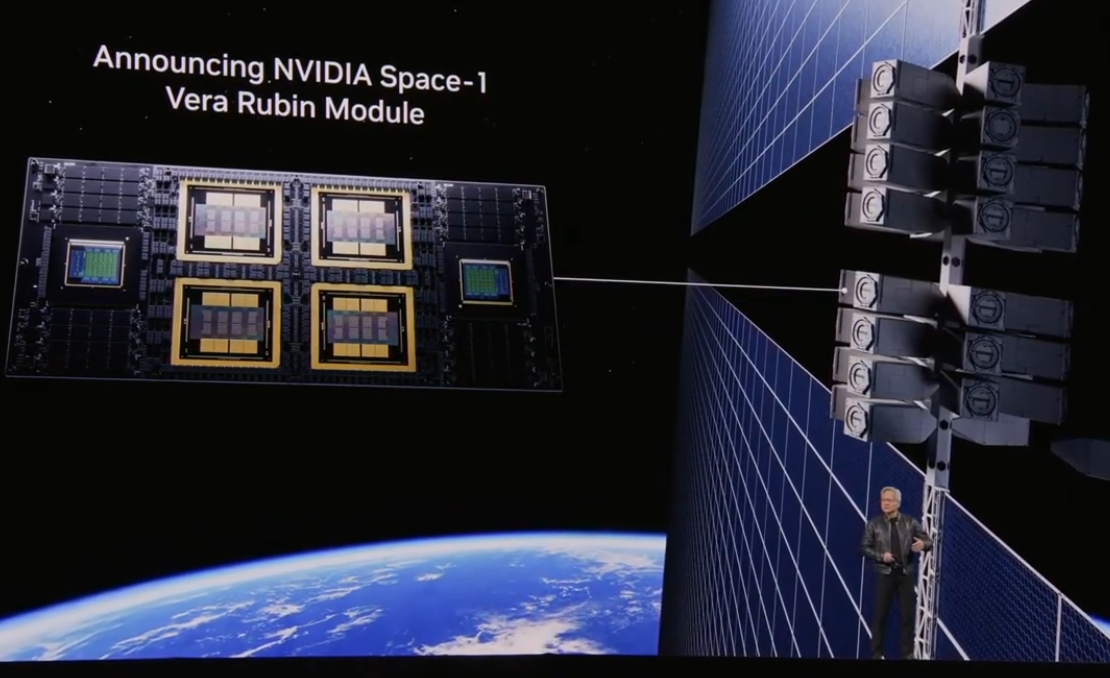
The engineering challenge: space radiation. Cosmic rays and solar particle events degrade standard semiconductor circuits in ways that cause random bit flips, computation errors, and eventual hardware failure. Radiation-hardening chips while maintaining the performance characteristics that make Vera Rubin useful requires essentially rebuilding the memory hierarchy and error correction systems from the ground up. NVIDIA’s Thor chip has already passed radiation certification and is running in satellites. Vera Rubin Space-1 is the next step.
Huang’s framing was characteristically matter-of-fact: AI compute goes where the compute needs to go. Sometimes that’s a hyperscale data center in Virginia. Sometimes that’s low Earth orbit. The infrastructure roadmap, apparently, has no ceiling.
My Bottom Line — and Where to Shop Right Now
I’ve been writing this series over days and I want to end it with the most direct, useful take I can give you.
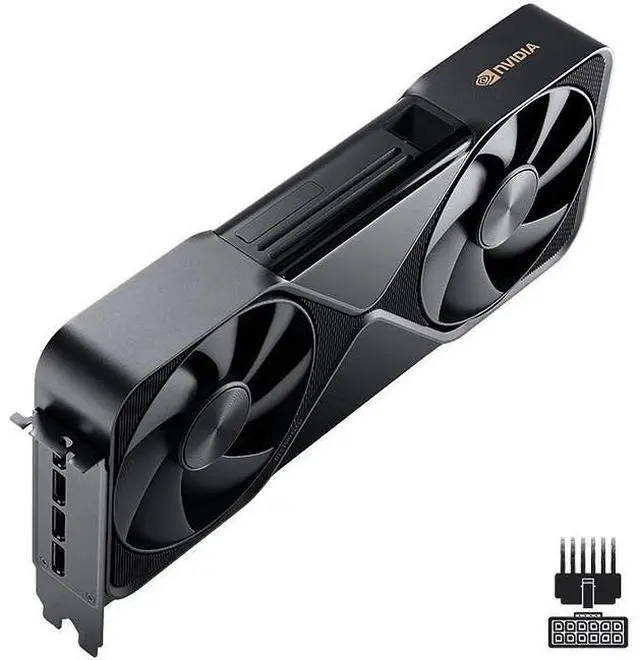
Buy RTX 50 now if you’re upgrading from RTX 30 or earlier. These cards are excellent, they’re Blackwell-based, and they’re the generation that receives DLSS 5 when it ships. You don’t need to wait for new hardware for that update. The RTX 50 Series cards at Newegg are exactly what you want to be on heading into the second half of 2026.
Get the monitor right. I’ll say it one more time. DLSS 5, Multi Frame Generation, 500fps neural rendering — none of this matters on a 60Hz display. The gaming monitors at Newegg starting at $250-$300 for 1440p 165Hz are where the visual payoff from your GPU actually becomes visible. This is the most underrated upgrade in PC gaming right now.
For laptop buyers: The RTX 50 Series gaming laptop lineup is what NVIDIA’s own GTC demos ran on. Local AI agents, DLSS 5, NeMo Claw — all of it runs on consumer RTX laptops, not just data center hardware. This generation has the on-device NPU and Blackwell GPU to handle real AI workloads without hitting the cloud.
Building fresh? The gaming desktop section at Newegg has pre-built systems with current RTX hardware if you want the capability without the build time.
Holding an RTX 40 card? Wait for Rubin consumer hardware in 2027. The generational jump from Ada Lovelace to Blackwell is solid but not dramatic. Rubin will be larger.
GTC 2026 was two hours of Jensen Huang explaining why NVIDIA’s position is stronger than it’s ever been — and backing it up with a hardware roadmap, a software platform, an enterprise strategy, eighteen robot companies, a space data center, and a snowman. I found it convincing.
The hardware to act on it is in stock at Newegg right now.
Related Posts
- NVIDIA GTC 2026, Part 1: “This Is the House That GeForce Made” — and DLSS 5 Just Changed Everything
- Sales Tax Holiday 2026: Save on PC Components, Peripherals, Laptops, Desktops, and Workstations at Newegg
- Apple Intelligence Features at WWDC 2026: The New Siri, Photo Editing, and What Your Device Needs
- Apple Parental Controls at WWDC 2026: The New Child Account Tools Explained
- iOS 27 Performance Boost: Every Speed and Design Change Apple Showed at WWDC 2026