
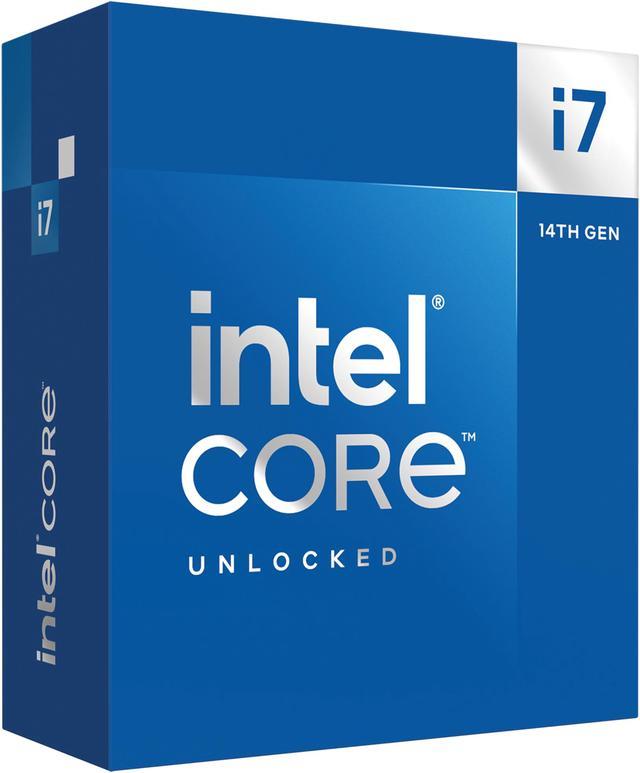
The conversation around desktop CPUs has changed. For years, the benchmark was simple: how many frames per second can this chip deliver in a game? In 2026, that question has expanded. Today, a top-tier desktop processor is judged not only by its gaming performance, but also by how well it handles artificial intelligence workloads — locally, on your own machine, without a cloud subscription.
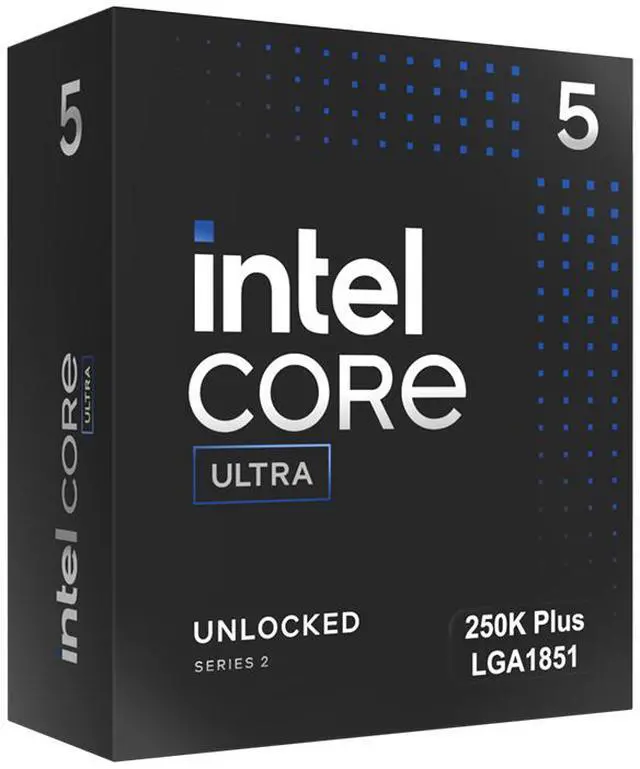
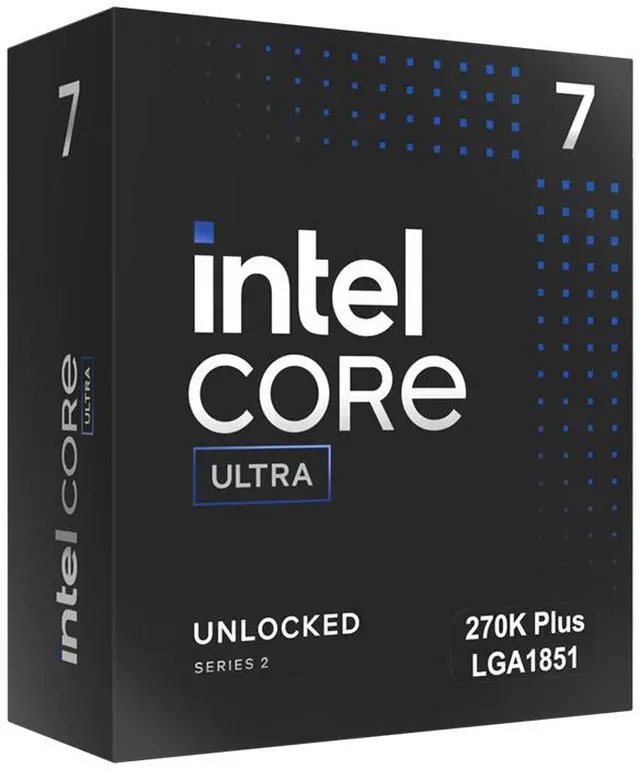
Intel’s answer to this new reality is the Core Ultra 200S Plus series, also known as the Arrow Lake Refresh. Three new chips arrive on March 26, 2026: the Intel Core Ultra 7 270K Plus, the Intel Core Ultra 5 250K Plus, and the Intel Core Ultra 5 250KF Plus. Together, they represent Intel’s most complete vision yet of what a modern desktop processor should be.

The AI Desktop Moment Has Arrived

We are living through a genuine shift in personal computing. Tools like local large language models (LLMs), AI image generators, real-time transcription, and AI-accelerated code completion are no longer niche. They are becoming standard parts of many professionals’ and enthusiasts’ daily workflows.
In early 2026, the demand for on-device AI acceleration has accelerated sharply. Microsoft’s Copilot features continue to deepen their integration into Windows 11. AI-driven game asset generation, NPC behavior modeling, and real-time ray tracing enhancement are arriving in major titles. Against this backdrop, the Arrow Lake Refresh lands at exactly the right moment.

NPU Neural Processing VisualizationWhat These Chips Bring to AI Workloads

Every processor in the Core Ultra 200S Plus lineup includes Intel’s integrated Neural Processing Unit (NPU), rated at 13 TOPS (Tera Operations Per Second). This dedicated AI silicon handles lightweight inference tasks — such as background blur in video calls, AI noise cancellation, and real-time language translation — without consuming CPU or GPU resources.
This matters more than many users realize. When your NPU handles AI background tasks, your CPU cores stay free for games, creative software, or whatever you have open. The result is smoother overall system performance across mixed workloads.

Intel’s Binary Optimization Tool: AI in Your Games Right Now

The flagship AI story accompanying this launch is Intel’s new Binary Optimization Tool. Announced alongside the Core Ultra 200S Plus processors on March 11, 2026, this tool applies machine learning analysis to game executables.
Here is how it works in practice. The tool scans a game’s binary code and identifies sections that can be recompiled with CPU-specific optimizations. These optimizations are applied automatically, with no action required from the game developer. The result is faster instruction execution on these specific processors.
Intel reports an average 15% gaming performance improvement across a wide library of titles when using the tool. In well-optimized scenarios, such as Shadow of the Tomb Raider, gains reach 39%. This is AI-driven software optimization delivering real hardware-level results — and it will only improve as more game profiles are added.

Local AI Model Running on DesktopSpecs Designed for AI-Enhanced Workflows

Understanding the hardware behind these processors reveals why they handle AI and mixed workloads so well:
The increased efficiency core count is directly relevant to AI workloads. E-cores excel at running concurrent, lower-priority threads — exactly the kind of background inference tasks that AI applications generate. The Core Ultra 7 270K Plus with its 16 E-cores is particularly well-suited for users who want to run local AI models alongside demanding desktop applications.

DDR5-7200 and the Memory Bandwidth Advantage
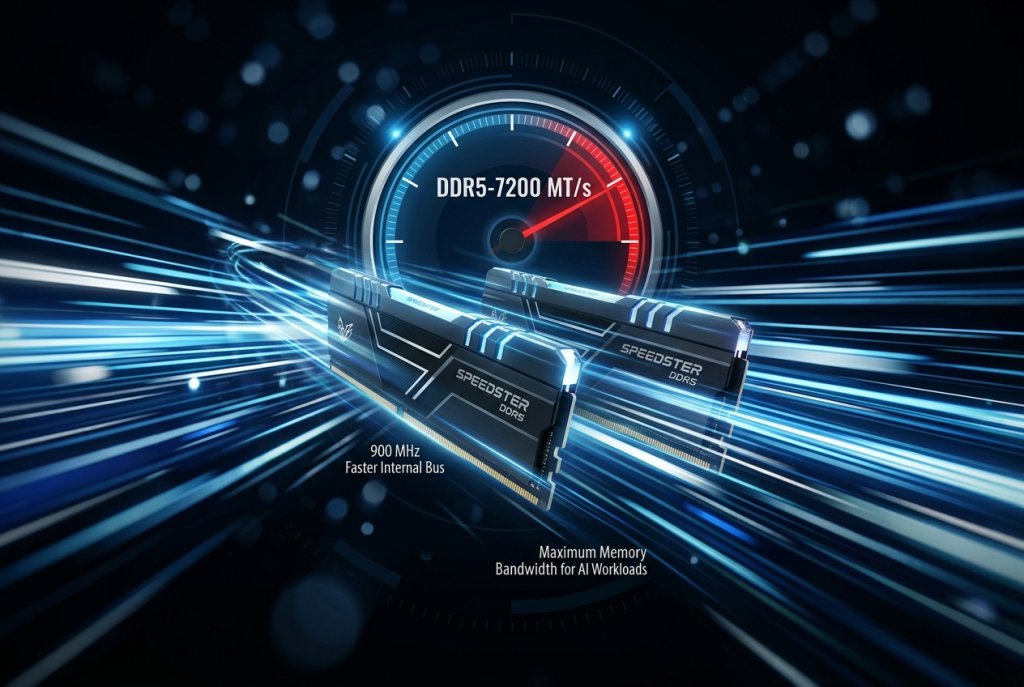
Faster memory directly benefits AI inference. Local AI models — whether running in llama.cpp, LM Studio, or native AI frameworks — are often memory-bandwidth limited. The jump to DDR5-7200 support in the 200S Plus chips, combined with the 900MHz improvement in the internal communication bus, meaningfully improves data throughput between the CPU and memory subsystem.
For users running AI image generators like Stable Diffusion with CPU-side preprocessing, or running mid-size language models at 7B parameters or below, this memory improvement translates to noticeably faster processing times.

DDR5-7200 Speed and Memory BandwidthContent Creators: A Natural Fit

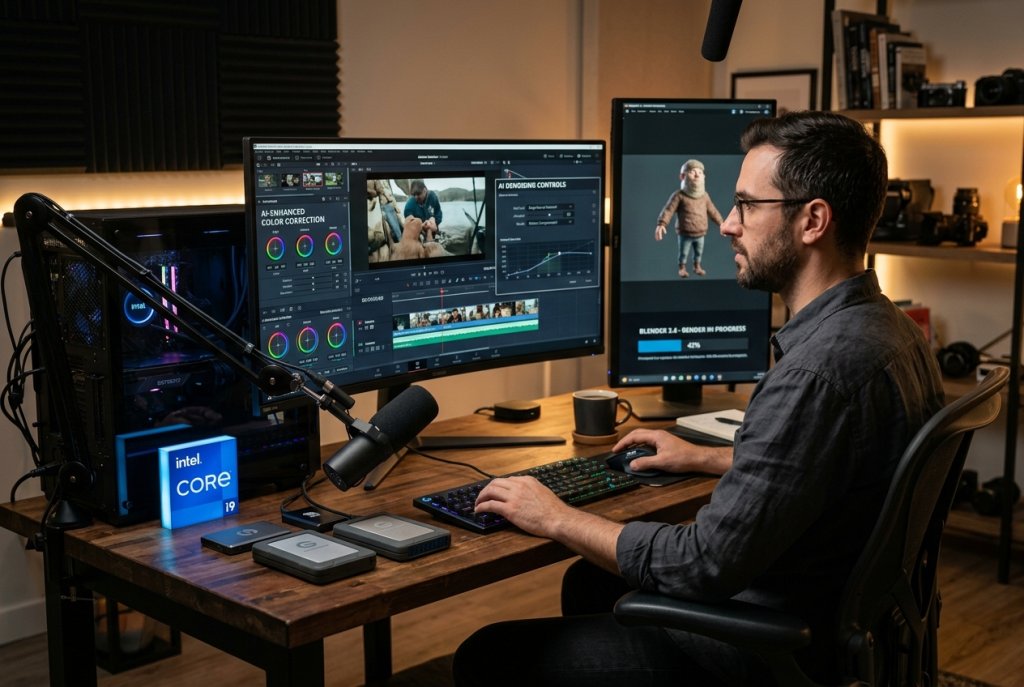
Content creators stand to gain from this platform in ways that go beyond raw core count. The combination of fast P-cores for single-threaded tasks (like video timeline scrubbing and audio processing), high E-core counts for background rendering, integrated Xe graphics for lightweight display tasks, and NPU acceleration for AI-enhanced editing tools makes the Core Ultra 200S Plus a genuine all-around workhorse.
For video editors using DaVinci Resolve, Adobe Premiere Pro, or Topaz Video AI, the combination of faster memory and more E-cores means shorter render times and smoother real-time preview playback. For 3D artists using Blender with AI denoising, the NPU offloads viewport denoising while the P-cores handle scene calculation.
The Core Ultra 5 250K Plus is an excellent entry point for this kind of mixed-use workflow. Its 18-core configuration handles both real-time gaming and background AI tasks without breaking a sweat. For pure compute builds without integrated graphics, the Core Ultra 5 250KF Plus offers the same capabilities at a slightly more focused configuration.

Content Creator AI Workflow SceneCompatibility and Future-Proofing

All three processors use the LGA 1851 socket and are compatible with Intel 800-series motherboards after a BIOS update. This platform already has a large and growing ecosystem of board options, cooling solutions, and memory configurations.
The DDR5-7200 support, combined with early compatibility for 4-rank CUDIMM modules, positions this platform well into the future. As DDR5 speeds continue to climb and CUDIMM support matures, users who build on this platform today will benefit from memory upgrades without needing a new motherboard.
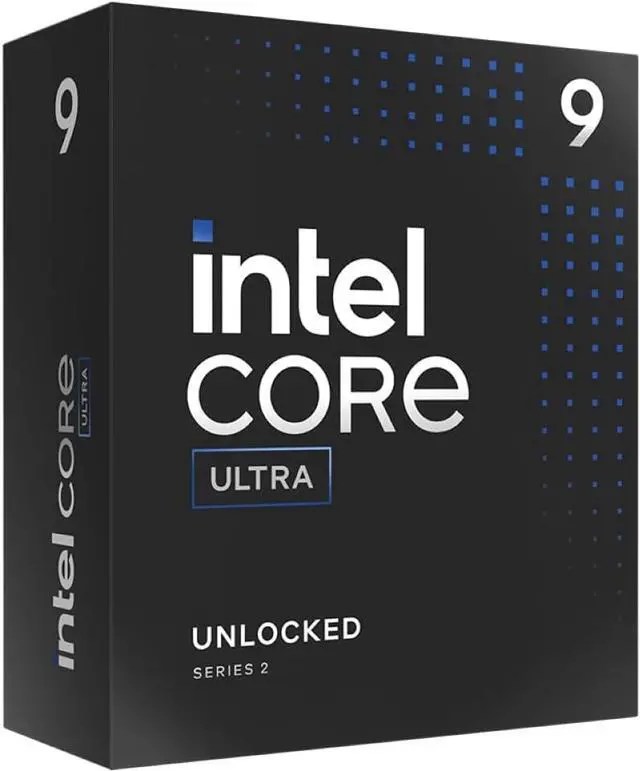
If you want to see where the existing Arrow Lake ecosystem stands before deciding, the current-generation Intel Core Ultra 9 285K offers a strong comparison point for high-end workloads.

The Bigger Picture: Why This Launch Matters

The Arrow Lake Refresh is not just a spec bump. It is Intel’s statement about what a desktop processor needs to be in the era of on-device AI. Gaming performance. AI acceleration. Memory bandwidth. Software intelligence via the Binary Optimization Tool. All of these come together in a single chip that fits into your existing platform.
As AI continues to move off the cloud and onto local hardware, having a processor capable of handling those workloads is increasingly important. The Core Ultra 200S Plus series makes that capability accessible for mainstream desktop builders right now.
Browse all available Intel desktop processors on Newegg and get ready. March 26 is just days away — and this is one launch worth being early for.
Future-Proof Platform Vision

Related Posts