
AMD has made it official: the X3D family is growing. The newly announced Ryzen 7 7700X3D takes the stacked-cache formula that turned the 7800X3D and 9800X3D into gaming legends and aims it squarely at builders who have been priced out of the party. No launch-day details spoiled here; instead, let us look at what this chip actually is, how it stacks up against its siblings, and why it lands at exactly the right moment for value-minded PC builders.
What Exactly Is the Ryzen 7 7700X3D?
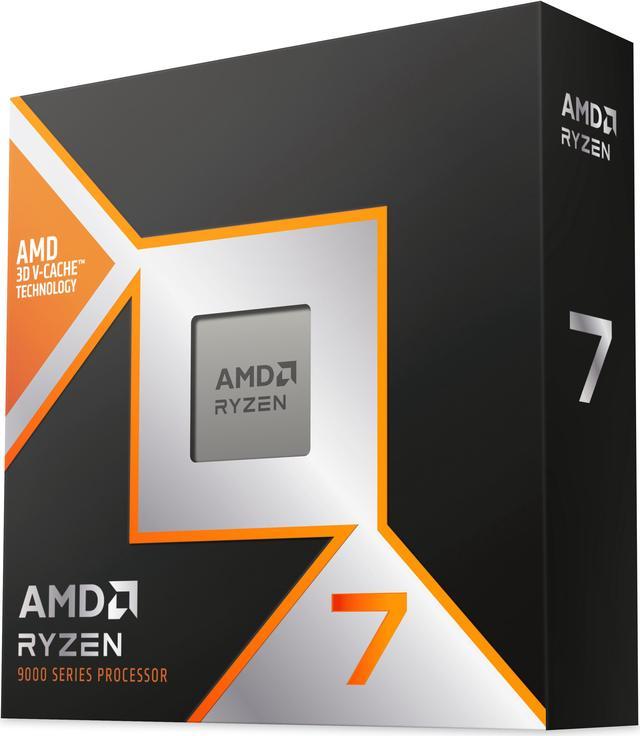
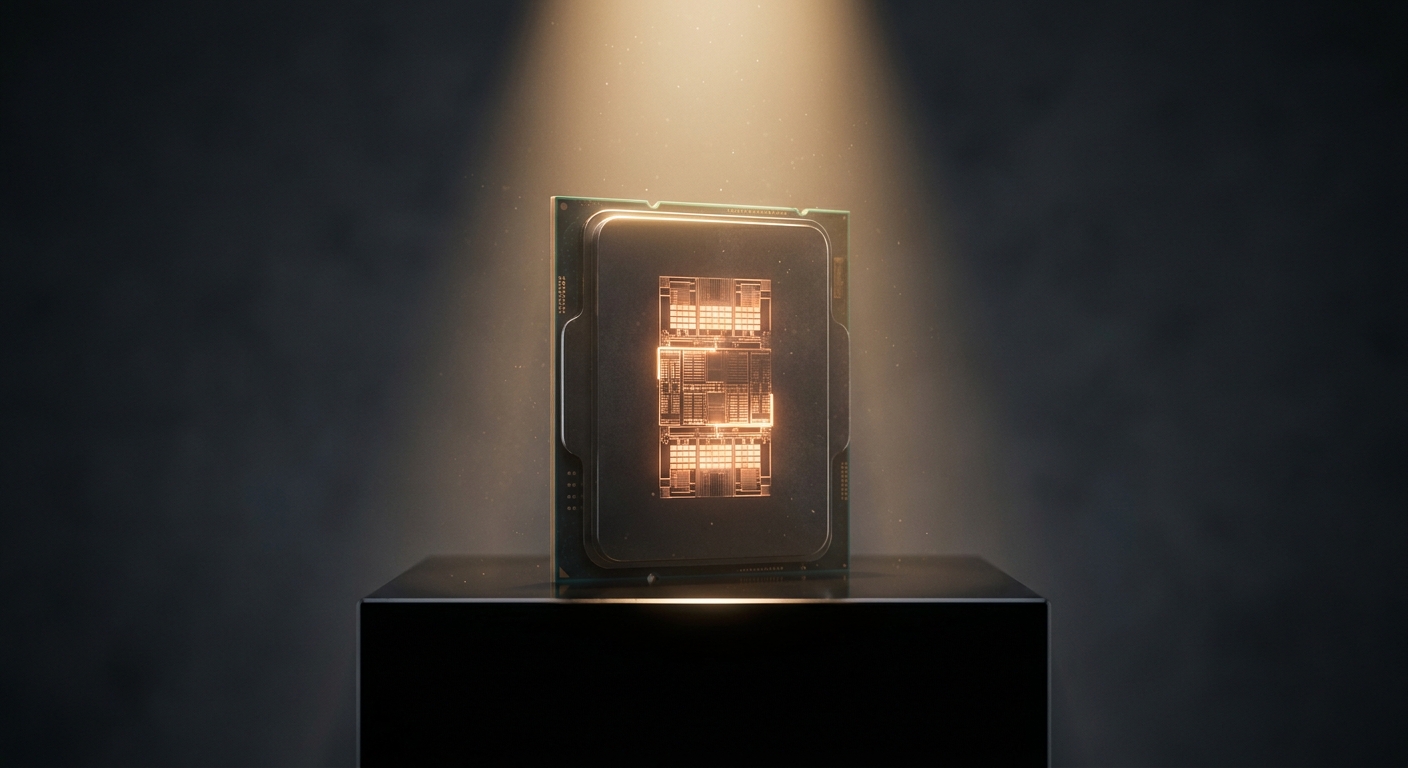
Unveiled at Computex 2026, the 7700X3D is an eight-core, sixteen-thread Zen 4 processor for Socket AM5, running at a 4.0GHz base clock and boosting to 4.5GHz within a 120W TDP. The headline number is the same one that matters on every X3D chip: 96MB of L3 cache (104MB total), courtesy of AMD’s 3D V-Cache stacking technology. In plain terms, AMD kept the full-size cache that makes X3D chips special and trimmed the clocks, creating a lower rung on the X3D ladder without sawing off what makes the ladder worth climbing.
The Cache That Changes Everything

Why do gamers obsess over this one spec? Games hammer the CPU with unpredictable memory accesses, physics, draw calls, NPC logic, asset streaming, and every trip out to system RAM costs precious nanoseconds. Triple the on-die L3 cache and far more of that hot data stays next to the cores. That is why an X3D chip with modest clocks routinely outruns higher-clocked processors in frame-rate tests, and why the 7700X3D giving up a few hundred megahertz against the 7800X3D is likely to matter far less than the spec sheet suggests. Cache is the engine; clocks are the trim level.
How It Compares to Its Siblings
| Spec | Ryzen 7 7700X3D | Ryzen 7 7800X3D | Ryzen 7 9800X3D |
|---|---|---|---|
| Architecture | Zen 4 | Zen 4 | Zen 5 |
| Cores / Threads | 8 / 16 | 8 / 16 | 8 / 16 |
| Base / Boost clock | 4.0 / 4.5 GHz | 4.2 / 5.0 GHz | 4.7 / 5.2 GHz |
| L3 cache | 96MB | 96MB | 96MB |
| TDP | 120W | 120W | 120W |
| Socket | AM5 | AM5 | AM5 |
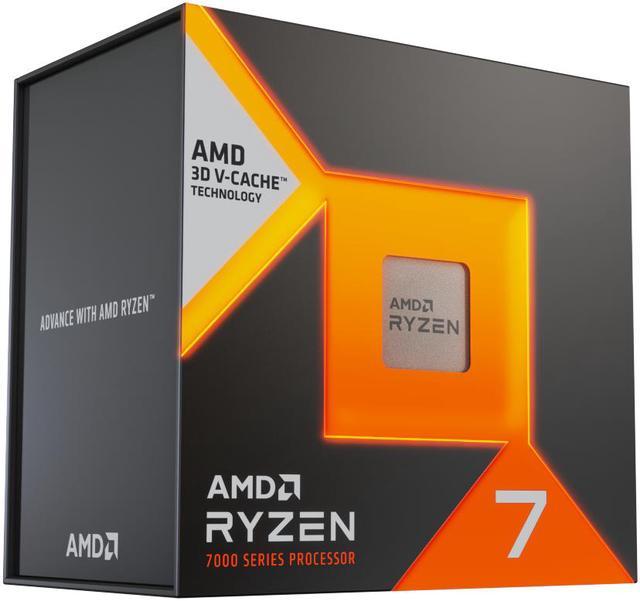
The pattern is clear: identical core counts, identical cache, identical power budget. The Ryzen 7 7800X3D keeps a 200-500MHz clock advantage, and the flagship Ryzen 7 9800X3D adds newer Zen 5 cores and second-generation cache stacking on top. In GPU-limited play at 1440p and 4K, the on-paper gaps between these three chips will compress further; the fundamental X3D experience, chart-topping 1% lows and silky frame pacing, is baked into all of them.
Arriving at Exactly the Right Moment
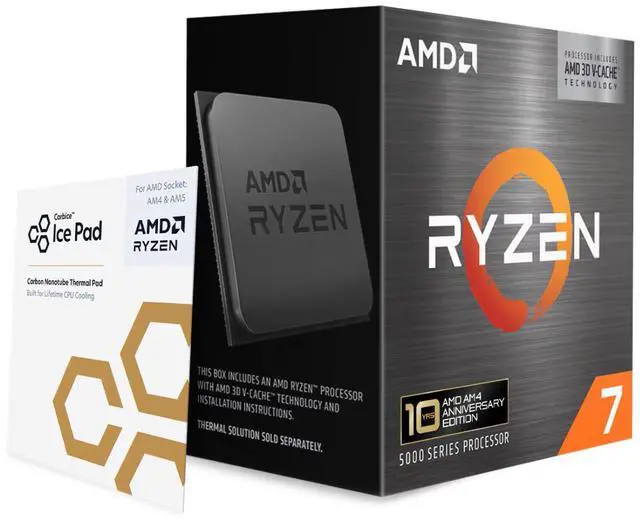
The 7700X3D lands amid the topic dominating every build forum this year: component prices. DRAM costs have climbed industry-wide, and GPU pricing continues to test budgets. That context makes a cache-heavy CPU unusually relevant, because 96MB of on-die L3 reduces how much your frame rate depends on expensive, exotic memory kits. A sensibly priced DDR5-6000 kit plus an X3D chip has long been the proven recipe, and a more accessible X3D entry point strengthens exactly the part of the build where value has been hardest to find. Notably, AMD paired this launch with a broader value message, even reviving the beloved 5800X3D for AM4 holdouts as a tenth-anniversary edition, and extending official AM5 platform support out to 2029, which turns any AM5 board you buy today into a genuinely long-term investment.
Who Should Care?
Three groups should watch this launch closely. First, budget-focused gamers building their first AM5 rig: the 7700X3D promises the X3D experience with one less compromise forced elsewhere in the parts list. Second, AM4 upgraders who have been waiting for the right moment to cross over: pairing this chip with a value B650 board and a DDR5-6000 kit is about as gentle as the AM5 on-ramp gets. Third, anyone eyeing the used or discounted 7800X3D market: a new rung below it will reshape that math too. If you want the absolute fastest, the 9800X3D is not going anywhere; if you want the smartest dollar-for-frame play, the newcomer deserves your attention.
The Bottom Line
The Ryzen 7 7700X3D is not a technological leap; it is something arguably more useful, a democratization of the best gaming CPU technology of this generation. Full cache, familiar power budget, friendlier positioning, on a platform now guaranteed through 2029. Availability details will land soon; when they do, you will find it alongside the rest of the family in Newegg’s AMD Ryzen CPU listings. Keep your BIOS updated and your parts list ready.
Read More
- Tom’s Hardware: AMD Launches Ryzen 7 7700X3D and Revives the 5800X3D — Full coverage of the announcement and its value-market context.
- TweakTown: Ryzen 7700X3D Announced for AM5 Upgraders — Announcement details focused on the upgrade audience.
- AMD Official: Ryzen Desktop Processors — The authoritative source for final specifications.
- Newegg Insider: 3D V-Cache Explained — Our primer on why stacked cache wins at gaming.
- Newegg Insider: Get Your AM5 Rig Ready — Motherboard picks to prepare a launch-ready build.
Related Posts
- Budget Gamers, Something Big Is Coming to AM5: What You Should Know
- Smart PC Upgrades with AI: Your Questions About Newegg’s PC Upgrader, Answered
- Build Your First Home NAS with Newegg’s NAS Builder: Three Real Scenarios
- How to Use Newegg’s Custom PC Builder: From Blank Page to Complete Build
- Why 8-Core X3D CPUs Are Still the Gaming Sweet Spot in 2026
Frequently Asked Questions
Common questions about the AMD Ryzen 7 7700X3D.