
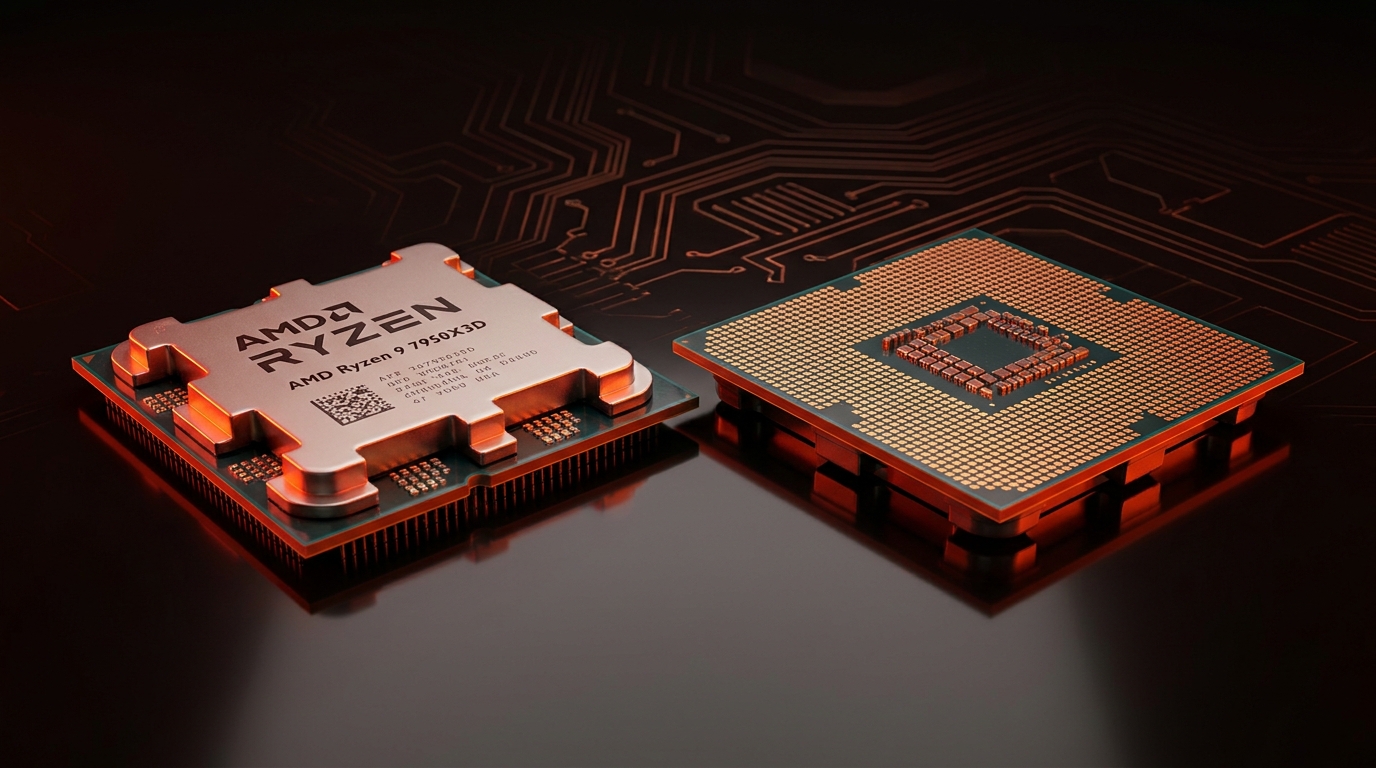
For gamers shopping AMD’s X3D lineup in 2026, two processors stand out for very different reasons. The Ryzen 7 5800X3D 10th Anniversary Edition revives the legendary AM4 gaming chip that defined a generation, while the brand-new Ryzen 7 7700X3D brings AMD’s 3D V-Cache magic to the modern AM5 platform at an aggressive price. Both are eight-core gaming specialists, but they sit on different platforms with different memory standards and different upgrade paths. This head-to-head breaks down exactly what each one offers so you can pick the right X3D chip for your build.
The Contenders: A Quick Overview
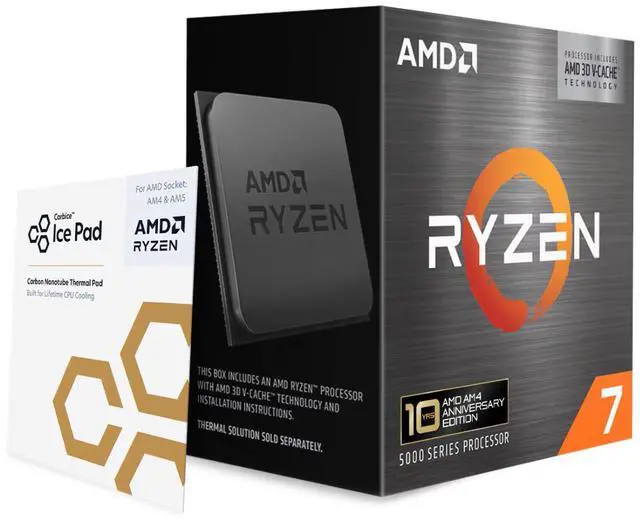
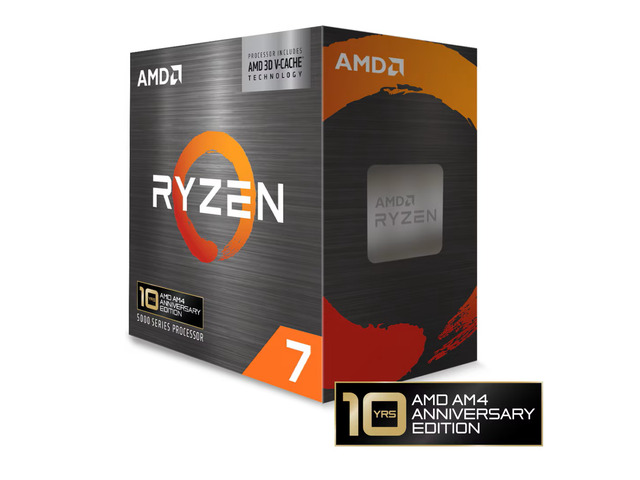
The Ryzen 7 5800X3D 10th Anniversary Edition is a re-engineered re-release of the 2022 original, launched to celebrate ten years of AMD’s Socket AM4 platform. It keeps the same core specification that made the 5800X3D famous: 8 Zen 3 cores, 16 threads, a 3.4 GHz base clock, up to 4.5 GHz boost, 96MB of L3 cache, and a 105W TDP. The anniversary edition ships in special commemorative packaging and is bundled with a Carbice Ice Pad thermal interface pad. It carries a suggested price of $349.
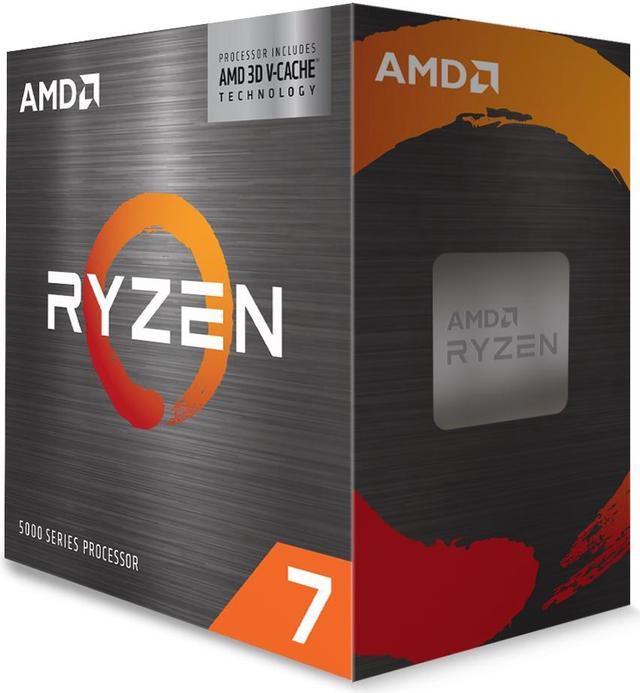
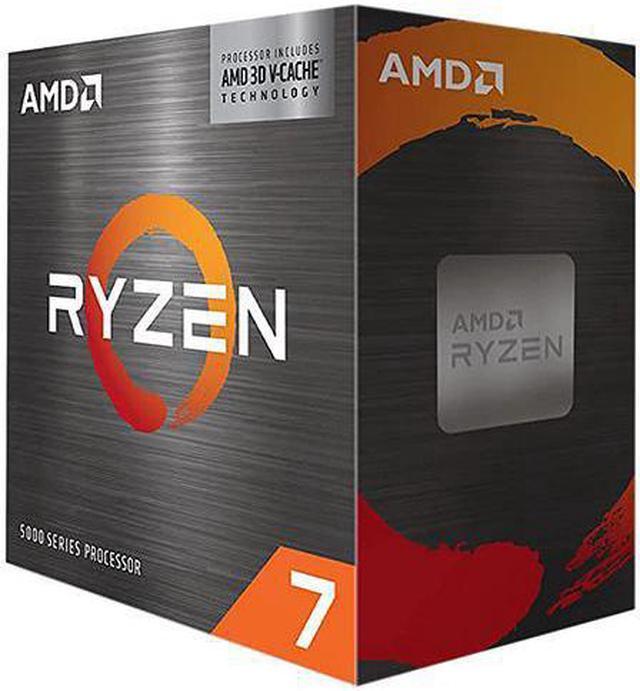
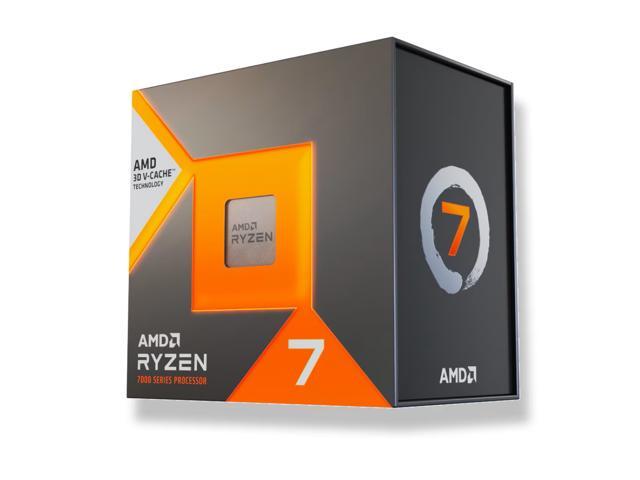
The Ryzen 7 7700X3D is the newcomer. Built on the Zen 4 architecture for Socket AM5, it pairs 8 cores and 16 threads with 104MB of total cache (96MB of which is L3, thanks to 3D V-Cache), a 4.0 GHz base clock, a 4.5 GHz boost, and a 120W TDP. It supports DDR5 memory, PCIe 5.0, and Wi-Fi 6E-class platform features. AMD has positioned it as a more affordable sibling to the 7800X3D, with a suggested price of $329.
Side-by-Side Specification Comparison
| Spec | Ryzen 7 5800X3D 10th Anniversary | Ryzen 7 7700X3D |
|---|---|---|
| Architecture | Zen 3 (Vermeer) | Zen 4 (Raphael) |
| Socket / Platform | AM4 | AM5 |
| Cores / Threads | 8 / 16 | 8 / 16 |
| Base Clock | 3.4 GHz | 4.0 GHz |
| Boost Clock | Up to 4.5 GHz | Up to 4.5 GHz |
| L3 Cache (with 3D V-Cache) | 96MB | 96MB (104MB total) |
| Memory Support | DDR4 | DDR5 |
| PCIe Version | PCIe 4.0 | PCIe 5.0 |
| TDP | 105W | 120W |
| Suggested Price | $349 | $329 |
How 3D V-Cache Changes Gaming
The shared headline feature is AMD’s 3D V-Cache, a stack of extra L3 cache mounted vertically on top of the processor die. Games are notoriously cache-hungry: when more of a game’s working data sits in fast on-chip cache instead of slower system memory, frame rates climb, frame times smooth out, and stutter drops. That is the entire reason both of these chips punch above their core count in gaming. An eight-core X3D chip frequently matches or beats pricier processors with far more cores in real-world gameplay.
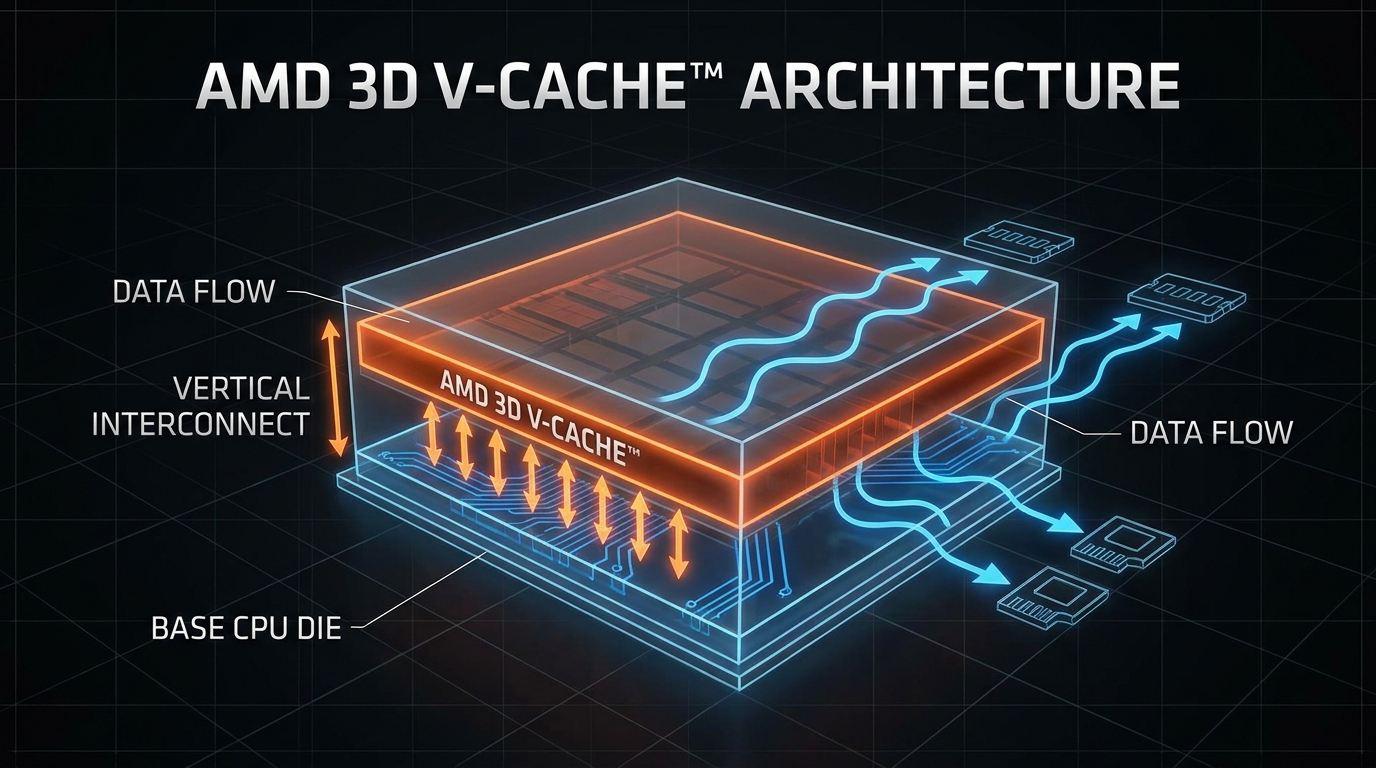
The difference between the two comes down to the platform around the cache. The 5800X3D pairs its cache with mature DDR4 memory, while the 7700X3D feeds its cache with faster DDR5 and a newer memory controller. In CPU-bound gaming scenarios, the 7700X3D’s newer architecture and higher clocks give it a measurable edge, but the gap is smaller than the four-year age difference might suggest, because cache does so much of the heavy lifting in both chips.
Deep Dive: 5800X3D 10th Anniversary Edition
The 5800X3D earned a cult following because it let AM4 owners get flagship-class gaming performance without replacing their motherboard or memory. The 10th Anniversary Edition exists for exactly that audience. If you are running a B450, X470, B550, or X570 board with DDR4 already installed, this chip is very likely the single biggest gaming upgrade you can make without rebuilding your entire system. Drop it in, update the BIOS, and you are done.
AMD notes that the re-release required real engineering work, because the original chip-bonding process was no longer in production, so the anniversary edition was re-validated for current manufacturing. The bundled Carbice Ice Pad thermal pad is a nice touch that simplifies cooler installation. You can find the 10th Anniversary Edition, Model 100-100000651POF, on the Newegg 5800X3D listing at $349.
Deep Dive: Ryzen 7 7700X3D
The 7700X3D is for builders moving onto, or already on, the AM5 platform. Because AM5 is AMD’s current socket with support committed for years to come, a 7700X3D build leaves the door open to future CPU upgrades without another motherboard swap. You also get DDR5 memory, PCIe 5.0 storage and graphics lanes, and modern connectivity. For a new build centered on gaming, the 7700X3D delivers most of the 7800X3D’s gaming experience at a lower entry price.
At $329 suggested, it slots in as the value entry point into AM5 X3D gaming. The slightly lower clocks compared to the 7800X3D cost a few percent in some titles, but the 96MB of game-friendly L3 cache keeps it firmly in the upper tier of gaming CPUs. Check current availability on the Ryzen 7 7700X3D product page.
Which One Should You Buy?
Buy the 5800X3D 10th Anniversary Edition if: You already own an AM4 motherboard and DDR4 memory and want the biggest possible gaming uplift for the least money and effort. There is no cheaper path to flagship-tier 1080p and 1440p gaming if your platform is already AM4. The commemorative packaging is a bonus for collectors.
Buy the 7700X3D if: You are building a new system or upgrading from an older platform. AM5 gives you DDR5, PCIe 5.0, and a long upgrade runway, and the 7700X3D delivers modern X3D gaming performance at an aggressive price. It is the smarter long-term foundation.
Either way, you are getting AMD’s gaming-optimized 3D V-Cache. The right choice is mostly a question of which platform you are building around. Browse the full AMD CPU lineup on Newegg to compare both alongside the rest of the Ryzen family.
Final Verdict
These two chips are not really competing for the same buyer. The 5800X3D 10th Anniversary Edition is a love letter to the AM4 faithful and the most cost-effective gaming upgrade for anyone already on that platform. The 7700X3D is the forward-looking pick for new AM5 builds, trading a small premium in platform cost for years of future upgradability and modern features. Both prove the same thing AMD’s X3D line has shown since 2022: for gaming, cache is king.
Related Posts
- 2-in-1 vs Traditional Laptop for Students: Which Should You Buy?
- Best USB-C Docks and Hubs for Students in 2026
- Wi-Fi 8 Is Almost Here: What ASUS’s Wi-Fi 8 Routers Actually Mean
- Best OLED Gaming Monitors in 2026
- How to Upgrade a Prebuilt Desktop PC: What You Can and Cannot Change
Frequently Asked Questions
Common questions about choosing between the Ryzen 7 5800X3D 10th Anniversary Edition and the Ryzen 7 7700X3D.