
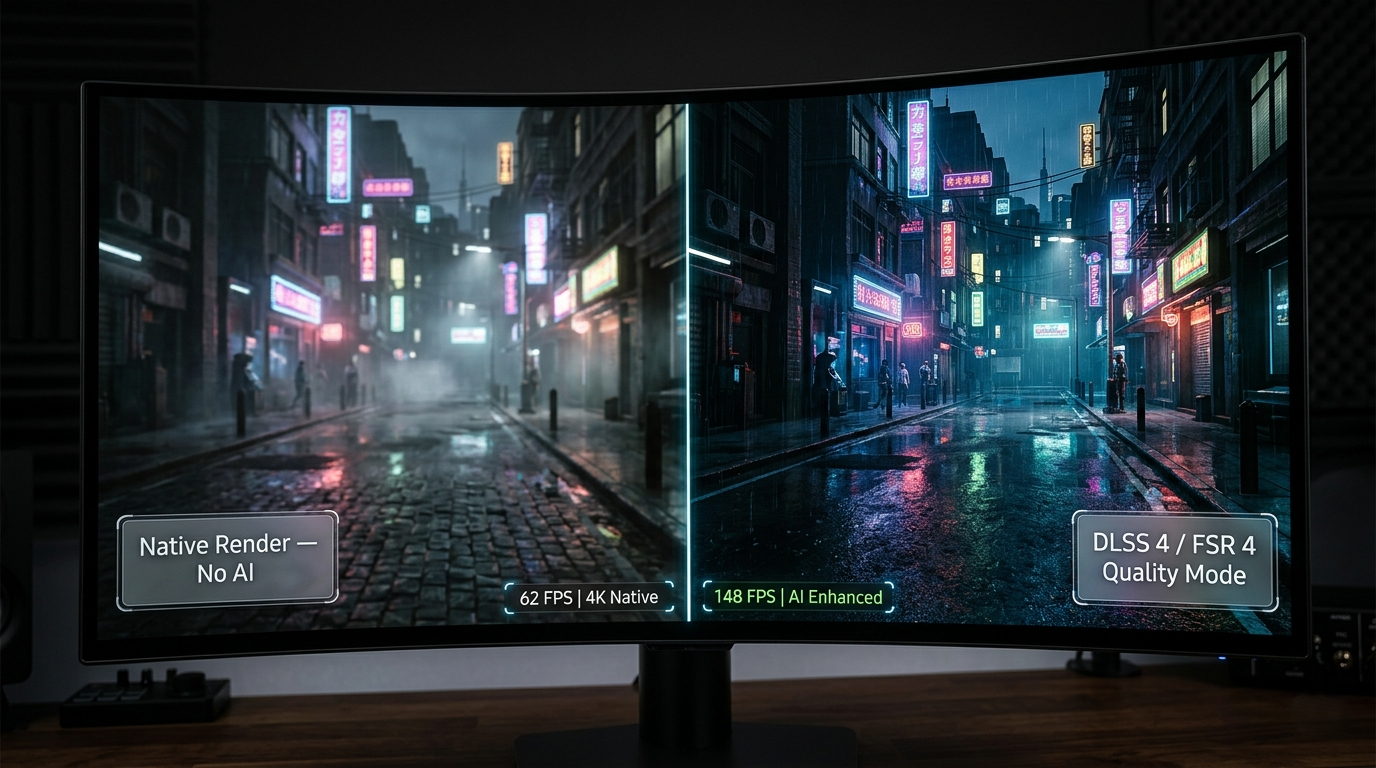
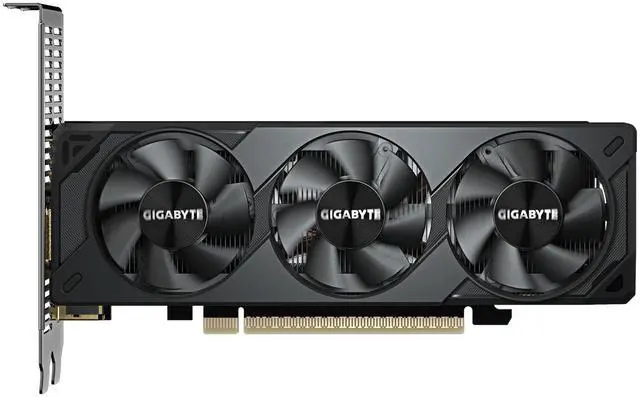
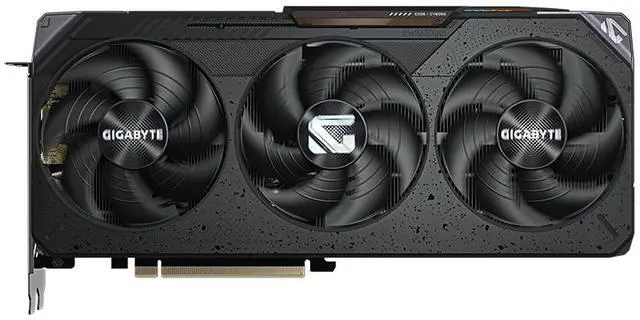
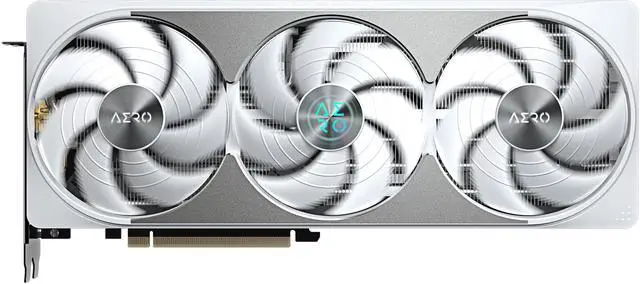
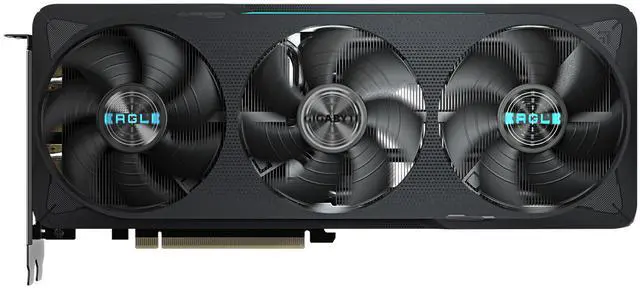
Two years ago, AI upscaling was a feature gamers appreciated but rarely debated. In 2026, it has become the single most consequential variable in GPU purchasing decisions. NVIDIA’s DLSS 4 with Multi Frame Generation, AMD’s machine-learning FSR 4, and Intel’s XeSS 2 have collectively redefined what “GPU performance” means in practice. At the same time, the rise of local AI inference — Stable Diffusion image generation, on-device large language models, and AI-assisted video tools — has turned the gaming GPU into a full-time AI accelerator that also happens to render games. Understanding these technologies is now essential knowledge for any buyer in 2026.
DLSS 4 and Multi Frame Generation: A Paradigm Shift
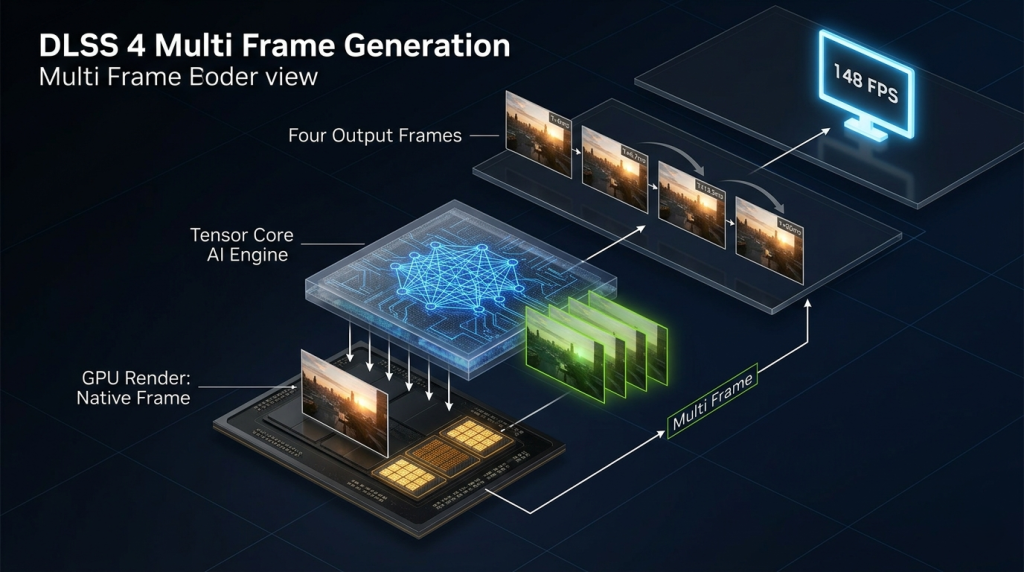
NVIDIA’s DLSS 4 (Deep Learning Super Sampling) represents the most significant generational leap in AI-accelerated rendering since the technology’s debut in 2019. At its core, DLSS 4 introduces Multi Frame Generation — a technique that generates up to three interpolated frames between each natively rendered frame. In supported titles, this can multiply effective output frame rates by up to 4x compared to native rendering, with NVIDIA’s Reflex low-latency technology managing the input lag that frame interpolation inherently introduces.
Multi Frame Generation runs exclusively on fourth-generation Tensor Cores found in Blackwell-architecture cards — specifically the GeForce RTX 5090 and GeForce RTX 5080. On Ada Lovelace cards like the GeForce RTX 4090 and GeForce RTX 4080 Super, DLSS 3 Frame Generation remains available — generating one additional interpolated frame per rendered frame — which still meaningfully boosts perceived smoothness in GPU-limited scenarios.
The practical impact is substantial. In Cyberpunk 2077 with full path tracing enabled at 4K, the RTX 5080 running DLSS 4 Quality mode with Multi Frame Generation reaches frame rates that the RTX 4080 Super could only approach with aggressive native upscaling. DLSS 4 does not replace raw GPU horsepower — it multiplies the effective value of the horsepower you already have.
 FSR 4: AMD’s Machine-Learning Breakthrough
For three generations, AMD’s FidelityFX Super Resolution relied on spatial algorithms rather than machine-learning models, producing results that were competitive in some titles and noticeably softer in others. With FSR 4, AMD adopted a transformer-based machine-learning model that analyzes temporal information alongside spatial data — the same fundamental methodology NVIDIA has used in DLSS since version 2.
The quality improvement is a genuine step-change. In independent testing across a range of 2025–2026 titles, FSR 4 Quality mode now produces output comparable to DLSS Quality mode in most scenarios, effectively closing a gap that persisted for three consecutive generations of AMD hardware. The Radeon RX 9060 XT is the first mid-range card to support FSR 4 natively, and real-world testing shows noticeably sharper and more temporally stable 1440p output versus its RDNA 3 predecessors. For buyers who previously felt that NVIDIA’s DLSS gave the platform a persistent image quality advantage, FSR 4 narrows or eliminates that concern.
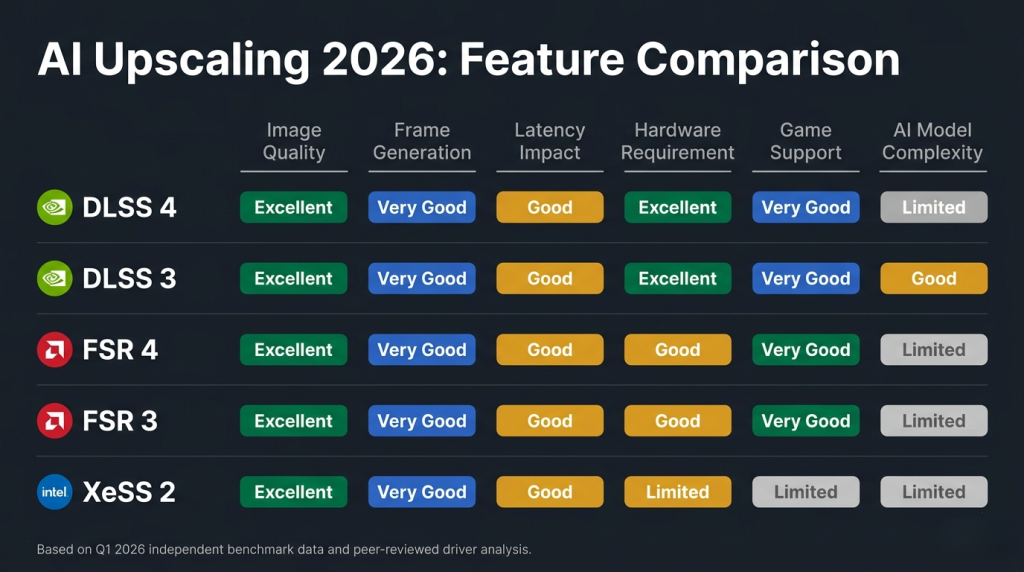
AI Upscaling Technology Comparison: 2026 Overview
| Technology | Developer | GPU Requirement | Frame Generation | Upscaling Quality (Quality Mode) |
|---|---|---|---|---|
| DLSS 4 (Multi Frame Gen) | NVIDIA | RTX 50 Series — Blackwell only | Up to 4x frames generated | Excellent |
| DLSS 3 (Frame Gen) | NVIDIA | RTX 40 Series — Ada Lovelace | 1 additional frame | Very Good |
| DLSS 2 (Super Resolution) | NVIDIA | RTX 20 Series and above | Not supported | Very Good |
| FSR 4 | AMD | RDNA 4 (RX 9000 series and above) | Frame Gen available | Very Good |
| FSR 3 | AMD | GCN 1.0+ (broad compatibility) | Frame Gen available | Good |
| XeSS 2 | Intel | Arc Alchemist and above | Limited availability | Good |
 Beyond Gaming: GPUs as Local AI Inference Engines
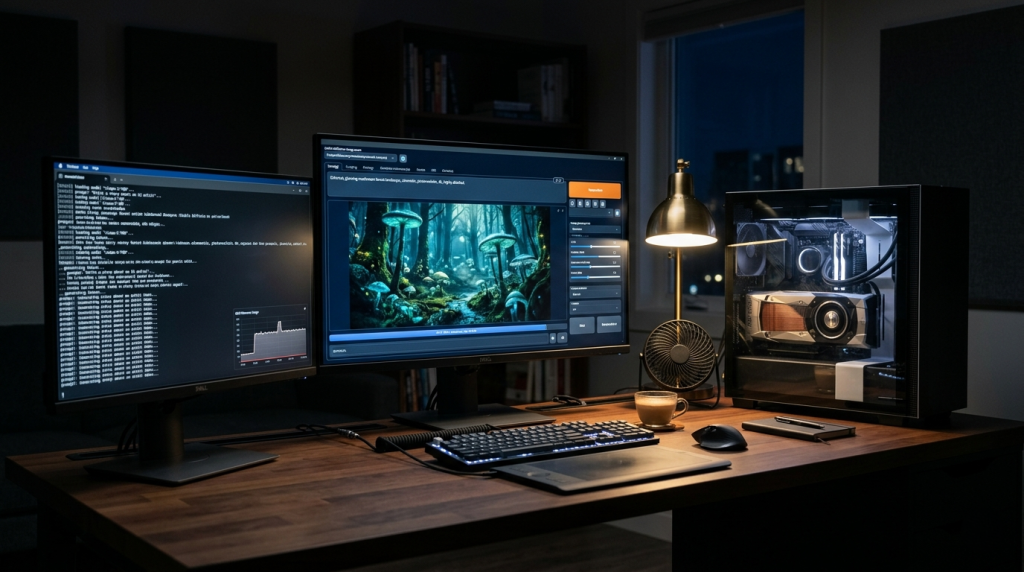
In 2026, the GPU’s role extends well beyond rendering game frames. Local AI inference has moved from developer experimentation to mainstream consumer behavior. Stable Diffusion image generation, on-device LLM (large language model) serving via tools like Ollama and LM Studio, real-time AI video upscaling, and AI-assisted audio restoration are all running routinely on desktop gaming GPUs.
NVIDIA’s CUDA ecosystem gives RTX cards a significant practical advantage in this space. Most local AI inference frameworks — ComfyUI, Automatic1111, llama.cpp’s CUDA backend, and others — are optimized primarily for CUDA, with AMD’s ROCm support typically arriving later and requiring more manual configuration. For users who want to run Stable Diffusion XL, local Whisper transcription, or LLM inference simultaneously with gaming workloads, the GeForce RTX 4090 with its 24GB GDDR6X remains the consumer benchmark for local AI model capacity — capable of running models up to approximately 13B parameters at full precision without quantization compromise.
VRAM capacity is the binding constraint for AI workloads. When evaluating a GPU for dual-purpose gaming and AI inference, prioritize VRAM capacity alongside raw shader performance. A card with 16GB VRAM at moderate shader performance often outperforms a faster card with 8GB for AI inference use cases.
 Power Efficiency in the AI GPU Era
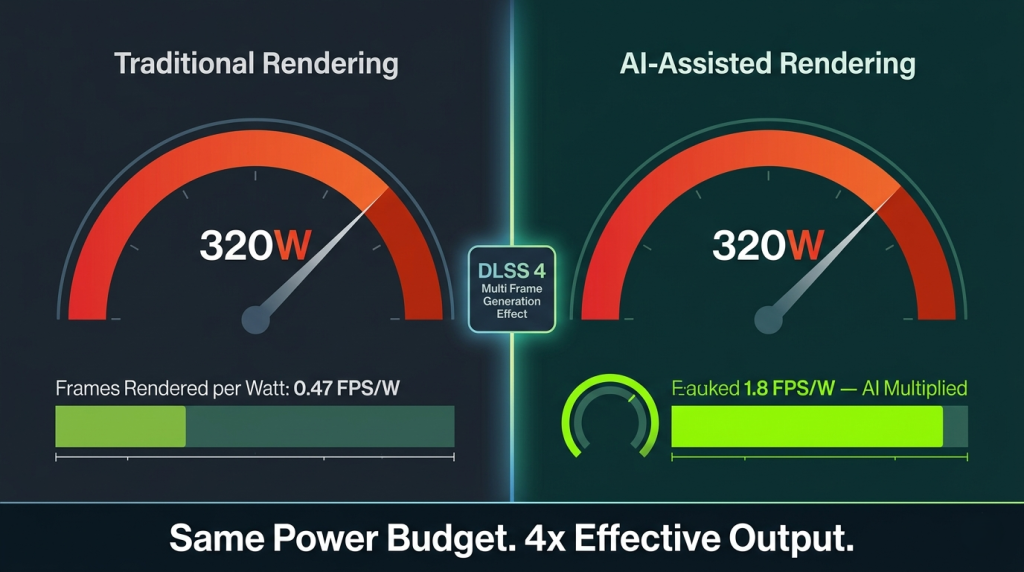
AI frame generation changes the efficiency calculus in ways that raw TDP numbers do not capture. The GeForce RTX 5080 draws approximately 320W at peak load — more than the RTX 4080 Super’s 285W. However, expressed as rendered-equivalent frames per joule, the RTX 50 series improves substantially: AI-generated frames require a fraction of the compute cost of natively rendered frames, meaning the system produces far more useful output per watt of power consumed.
AMD’s RDNA 4 brings similar efficiency improvements. The Radeon RX 7700 XT (RDNA 3) already competed strongly on efficiency at its price tier; RDNA 4 continues that trajectory while adding ML-based FSR 4 upscaling that extracts more perceived performance from the same hardware budget.
For users building in compact cases or small form factor enclosures, thermal management remains important. Higher-TDP Blackwell cards benefit from high-quality cooling solutions — browse the NVIDIA product lineup on Newegg to find cards with robust triple-fan or vapor chamber cooling designs that sustain performance under extended load without throttling.
 Workstation AI: Where Consumer GPUs Reach Their Limits
For professional AI workloads beyond gaming — computer vision pipelines, LLM fine-tuning, CUDA-accelerated data preprocessing — consumer GPUs reach limits quickly. Workstation Graphics Cards including NVIDIA’s RTX Pro lineup offer ECC memory support, higher VRAM capacities (up to 48GB on select models), and certified driver stacks that consumer cards do not provide. If your workflow has moved from hobbyist AI experimentation to production-grade inference or training, the workstation segment is worth exploring on Newegg.
For teams that also need the gaming GPU in their workflow — game developers, technical artists, and ML engineers who test both gaming and AI compute performance — the GeForce RTX 4080 offers a workable middle ground: strong AI inference performance, 16GB GDDR6X, and full gaming capability in a single card.
 Choosing Your AI-Enhanced GPU in 2026
The AI capabilities built into today’s GPUs are not marketing footnotes — they are practical features that directly shape how smoothly your games run, how capable your local AI workflows are, and how your hardware will age over the coming product cycle. The frame generation generation gap between RTX 40 and RTX 50 series is real; so is FSR 4’s leap over FSR 3. These differences matter at the point of purchase.
Browse the complete GPU catalog on Newegg to compare specifications, VRAM capacity, and AI feature support across every available card. If you are adding discrete GPU performance to a laptop or compact desktop, Newegg’s external graphics enclosure options provide a flexible upgrade path without a full system rebuild. And if you are sitting on older hardware, Newegg’s Graphics Card Trade-In Program can help offset the cost of moving to current-generation AI-capable hardware.
AI-accelerated rendering has made the 2026 GPU generation the most capable and the most nuanced in the industry’s history. The right card is the one that combines the raw rendering power and the AI feature set your specific workflow demands.
Related Posts
- Best Graphics Cards Under $600 in 2026
- The 2026 GPU Battlefield: NVIDIA RTX 50 Series vs AMD RDNA 4 Across Every Price Tier
- Intel Unveils Arc PRO Graphics Drivers
- 7800X3D vs 7700X3D: Which X3D Gaming Chip Should You Buy Now?
- Ryzen 7 7700X3D vs 7700X, 9600X, Core Ultra 7 265K & i7-14700K: Which Gaming CPU Wins?