
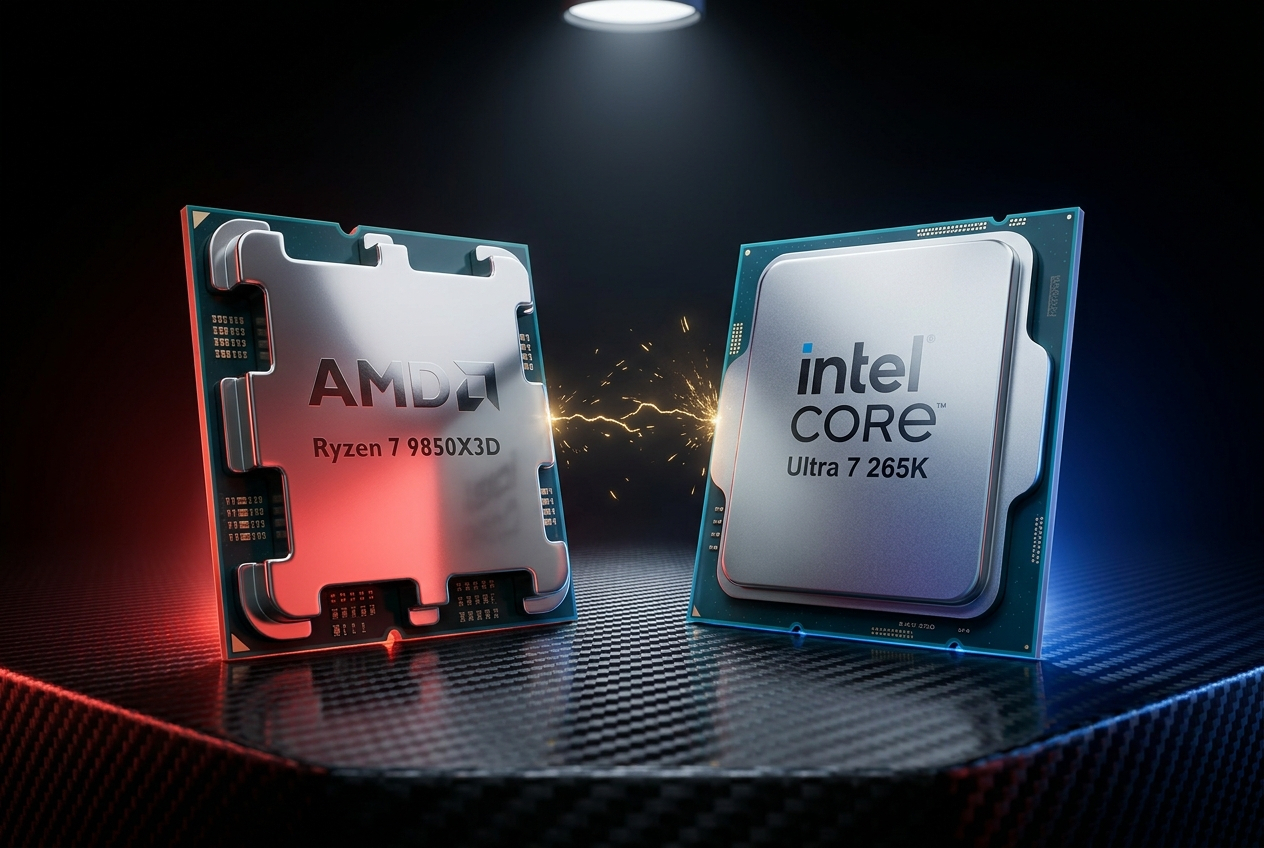
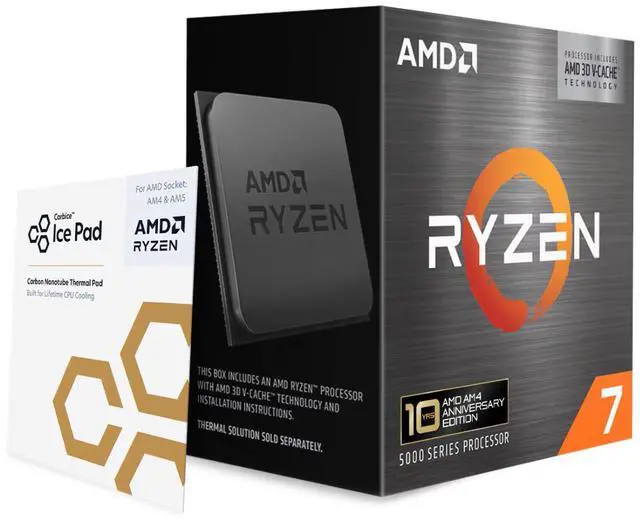
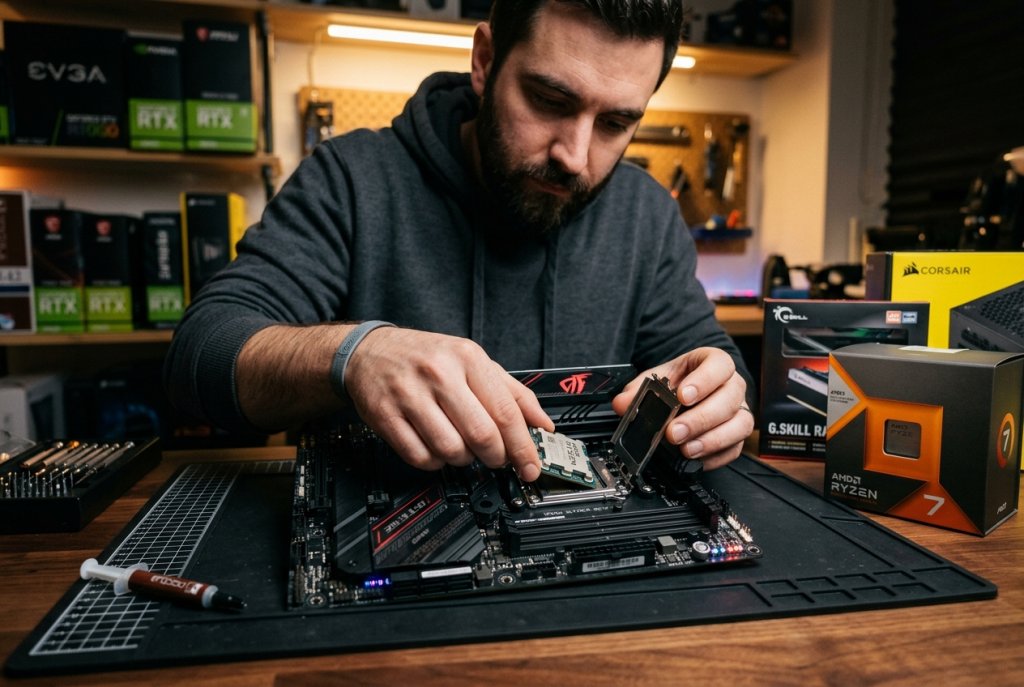
Gaming CPU selection in 2026 has never been more nuanced — or more consequential. The gap between the right and wrong processor for your use case has widened as architectures have specialized. AMD’s 3D V-Cache technology continues to dominate pure gaming performance benchmarks, while Intel’s Arrow Lake architecture with the Core Ultra 7 265K pursues a broader efficiency narrative. Add the Ryzen 7 9850X3D to the conversation as the newest generational challenger to the entrenched 7800X3D, and buyers face a genuinely complex decision. This article cuts through the specification noise to answer the questions that matter most for gaming-focused buyers in 2026.
The V-Cache Advantage: Why AMD Still Leads in Gaming
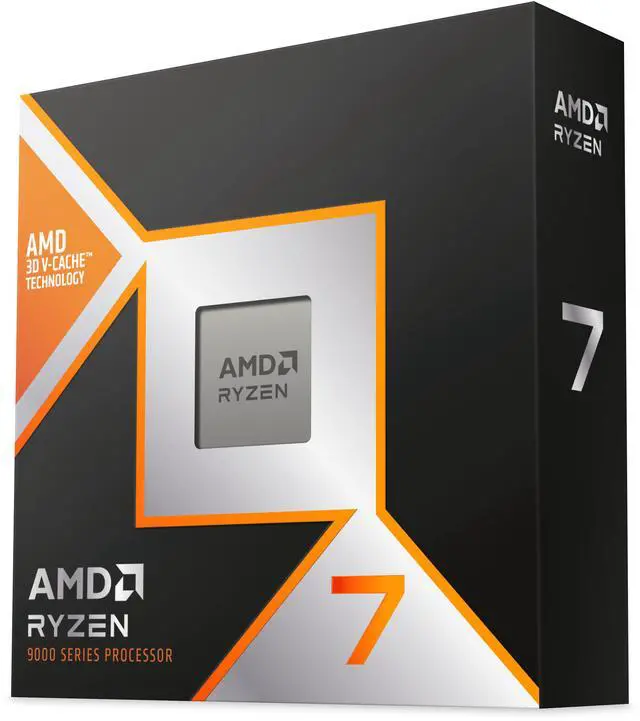
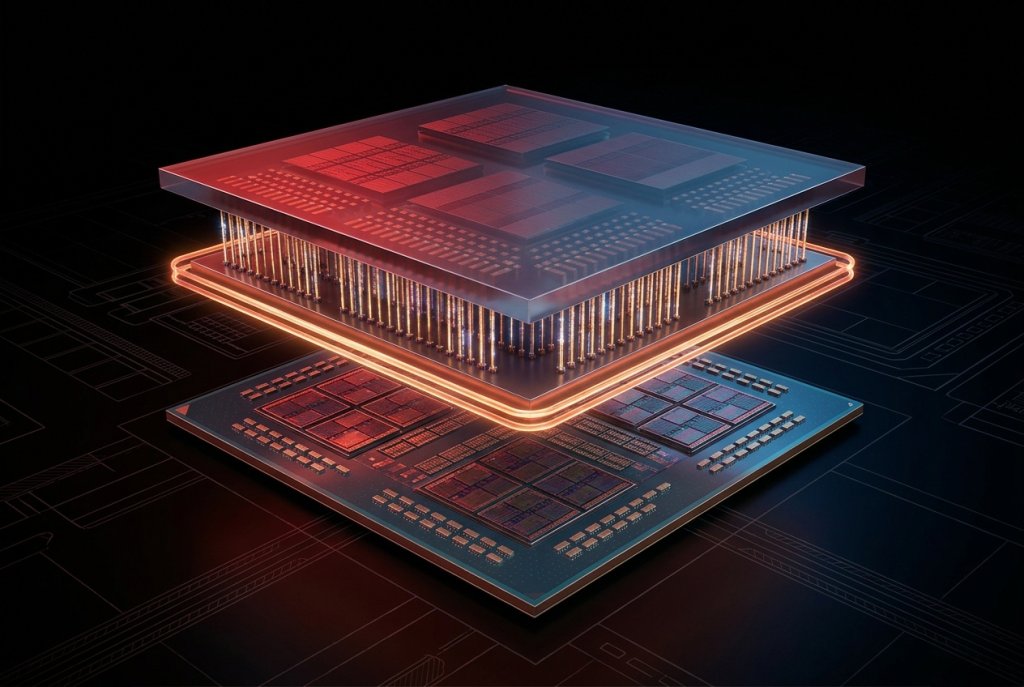
AMD’s 3D V-Cache technology — first introduced with the Ryzen 7 5800X3D and refined across successive generations — stacks additional L3 cache directly on top of the processor die using advanced 3D packaging. The Ryzen 7 7800X3D carries 96MB of total L3 cache, while the newer Ryzen 7 9850X3D pushes that figure to 128MB on the Zen 5 architecture.
This cache expansion addresses one of the most persistent bottlenecks in gaming workloads: the latency between the CPU and system RAM. Modern games — particularly open-world titles, competitive shooters, and strategy games with complex simulation loads — repeatedly request small data sets that, without V-Cache, require round trips to slower main memory. By keeping these working data sets in the massive on-die cache, 3D V-Cache processors deliver smoother frame pacing, higher 1% Low FPS values, and more consistent frame delivery than equivalently priced competitors without the technology.
For a buyer building or upgrading a gaming desktop with a high-refresh 1440p monitor, AMD’s V-Cache line represents the architecturally superior choice for pure gaming workloads. Browse AMD CPU Processors on Newegg to compare the full Ryzen 9000 and 7000 series lineup.
 Ryzen 7 7800X3D vs. Ryzen 7 9850X3D: The Generational Upgrade Question
The Ryzen 7 7800X3D established a benchmark that forced Intel to reevaluate its gaming CPU roadmap. For 2026 buyers, the relevant question is whether the newer Ryzen 7 9850X3D justifies its generational positioning over the now-mature 7800X3D.
| Specification | Ryzen 7 7800X3D | Ryzen 7 9850X3D |
|---|---|---|
| Architecture | Zen 4 | Zen 5 |
| Cores / Threads | 8C / 16T | 8C / 16T |
| L3 Cache (Total) | 96MB (3D V-Cache) | 128MB (3D V-Cache) |
| Base Clock | 4.2 GHz | 4.6 GHz |
| Boost Clock | 5.0 GHz | 5.6 GHz |
| TDP | 120W | 120W |
| Memory Support | DDR5-5200 | DDR5-5600 |
| PCIe Support | PCIe 5.0 | PCIe 5.0 |
| Platform | AM5 | AM5 |
The Ryzen 7 9850X3D’s Zen 5 architecture brings meaningful IPC (Instructions Per Clock) improvements — approximately 16% higher single-threaded performance over Zen 4 in compute-heavy workloads. In gaming terms, this IPC gain combines with the expanded 128MB V-Cache to produce measurable improvements in CPU-bottlenecked scenarios.
In 1440p gaming benchmarks where the GPU rather than the CPU is the primary bottleneck, the 7800X3D and 9850X3D frequently deliver within 5% of each other. The 9850X3D’s advantage becomes clear in CPU-sensitive titles, streaming-while-gaming scenarios, and games with complex physics simulations where the additional IPC and cache headroom translate directly to higher average and 1% Low frame rates. Both processors share the AM5 socket platform, meaning AM5-compatible motherboards purchased for a 7800X3D build today support a future 9850X3D upgrade path.
 Intel Core Ultra 7 265K: Arrow Lake’s Gaming Position
Intel’s Core Ultra 7 265K represents Arrow Lake, the company’s 2024/2025 desktop architecture built on Intel’s 18A-class process technology. The 265K brings 20 cores (8 Performance + 12 Efficiency), an integrated NPU for AI acceleration workloads, and the new Intel Xe2 graphics architecture even in its desktop discrete GPU ecosystem context.
| Specification | Intel Core Ultra 7 265K | Ryzen 7 9850X3D |
|---|---|---|
| Architecture | Arrow Lake (Lion Cove + Skymont) | Zen 5 + Zen 5c (CCD+IOD) |
| Cores / Threads | 20C / 20T (8P + 12E) | 8C / 16T |
| L3 Cache | 30MB (no V-Cache) | 128MB (3D V-Cache) |
| Base Clock (P-Core) | 3.9 GHz | 4.6 GHz |
| Boost Clock (P-Core) | 5.5 GHz | 5.6 GHz |
| TDP | 125W | 120W |
| Memory Support | DDR5-6400 / DDR4-3200 | DDR5-5600 |
| NPU | Yes (AI Boost) | No dedicated NPU |
| Platform | LGA1851 | AM5 |
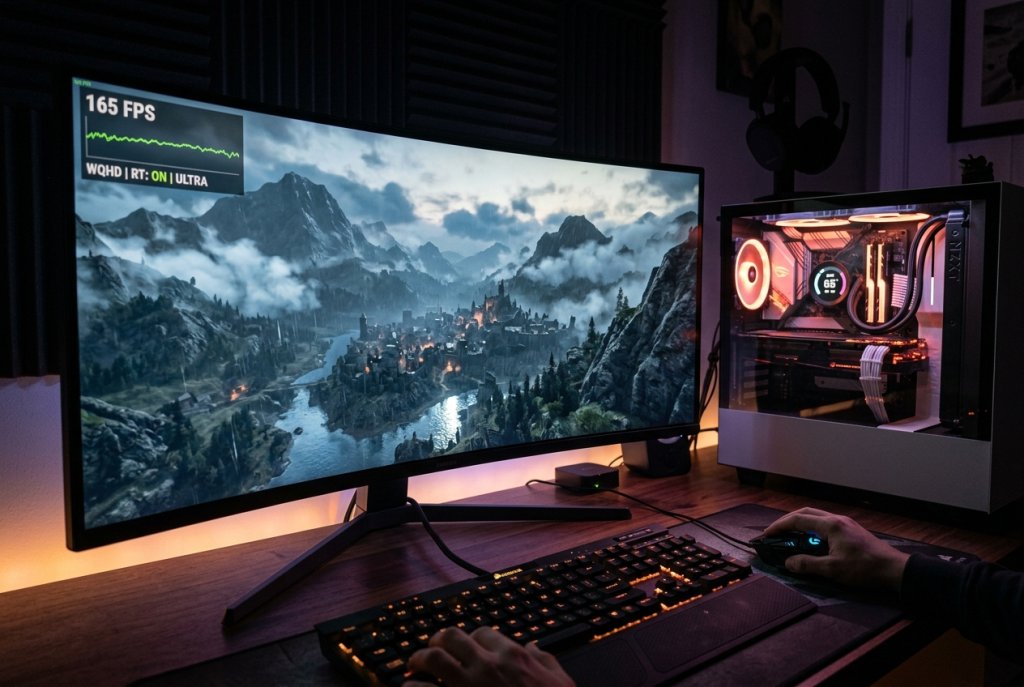
In gaming benchmarks at 1440p resolution, the Ryzen 7 9850X3D leads the Core Ultra 7 265K by approximately 12–18% in most titles, driven by the V-Cache advantage in cache-sensitive game engines. At 1080p — where CPU performance has greater influence on frame rates — this gap widens to 18–25% in CPU-bottlenecked scenarios.
The Core Ultra 7 265K’s competitive advantage lies outside pure gaming: its higher efficiency core count, NPU integration, and broader multi-threaded workload performance make it a stronger choice for gaming-plus-streaming, gaming-plus-content-creation, or gaming-plus-AI-inference workflows. For a buyer whose PC serves multiple professional and creative functions alongside gaming, Arrow Lake’s broader capability profile is genuinely compelling. Explore Intel CPU Processors on Newegg for the complete Arrow Lake lineup.
 Power Efficiency: A Closer Race Than Expected
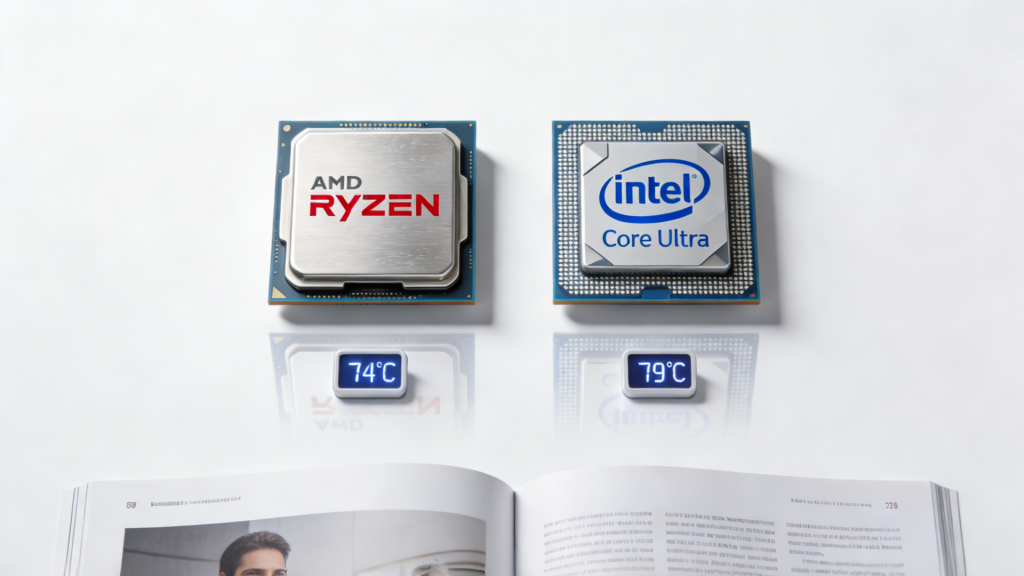
Power consumption has historically been Intel’s weakness in gaming CPU comparisons, but Arrow Lake’s process advancement meaningfully narrows the gap.
| Scenario | Core Ultra 7 265K | Ryzen 7 9850X3D | Ryzen 7 7800X3D |
|---|---|---|---|
| Gaming Average Draw (Package) | ~95W | ~88W | ~78W |
| All-Core Cinebench R23 | ~150W | ~125W | ~120W |
| Idle / Light Load | ~15W | ~18W | ~15W |
| Performance per Watt (Gaming) | Moderate | High | High |
Both AMD V-Cache processors operate within their 120W TDP envelope during gaming workloads, with the 9850X3D drawing slightly more than the 7800X3D due to its higher base clock speeds. The Core Ultra 7 265K draws somewhat more power in gaming scenarios, though the gap is considerably smaller than previous Intel generations. In all-core workloads where Arrow Lake’s efficiency cores contribute, the 265K’s power efficiency improves substantially.
For a gaming PC build, ensure your power supply provides sufficient headroom — a 750W 80+ Gold unit is the minimum recommended for any of these processors paired with a mid-range or high-end GPU. Use Newegg’s Custom PC Builder to verify your complete system component compatibility before purchasing.
 Linux and ChromeOS Gaming: Platform Considerations
For buyers who game on Linux or ChromeOS — a segment that has grown significantly following improvements in Proton and Steam Deck compatibility layers — CPU platform matters beyond raw performance numbers.
Both AMD and Intel processors are fully supported in Linux gaming environments. AMD’s Ryzen platform has historically enjoyed slightly faster driver maturation and more consistent open-source driver support, making the 7800X3D and 9850X3D the more immediately reliable choices for Linux gaming builds. The Core Ultra 7 265K’s newer architecture occasionally requires kernel version updates for optimal behavior, though Intel’s mainline kernel contributions have improved significantly in recent years.
For ChromeOS workloads, both platforms perform comparably. Intel’s longstanding ChromeOS ecosystem integration gives Arrow Lake CPUs a minor advantage in enterprise Chromebook-adjacent deployments, but for desktop Linux gaming, AMD’s platform maturity is the practical recommendation.
 The Verdict: Match Your CPU to Your Actual Workload
For pure 1440p gaming, the Ryzen 7 9850X3D is the performance leader in 2026, with the 7800X3D remaining an exceptional and widely available alternative. The V-Cache advantage in gaming is real, measurable, and consistent across title genres.
For gaming plus multi-threaded workloads, the Core Ultra 7 265K’s 20-core configuration and NPU integration provide capabilities that V-Cache gaming CPUs cannot match. If your PC serves as a workstation, streaming machine, and gaming rig simultaneously, Arrow Lake earns serious consideration.
Pair your chosen processor with high-speed DDR5 RAM, a compatible motherboard, and a fast NVMe SSD to build a system that extracts the full potential of whichever architecture you choose.
Related Posts
- Best CPUs for Gaming and Productivity in 2026: Intel vs AMD Showdown
- Should You Buy an Unlocked CPU in 2026? A Practical Guide for Every Type of Builder
- Unlocked vs. Locked CPUs Explained: What the “K” Really Means in 2026
- Do You Actually Need a Xeon or Threadripper? A 2026 Workload Guide to Choosing the Right CPU Platform
- Desktop CPU vs. Server CPU: What’s Actually Different Under the Hood in 2026