
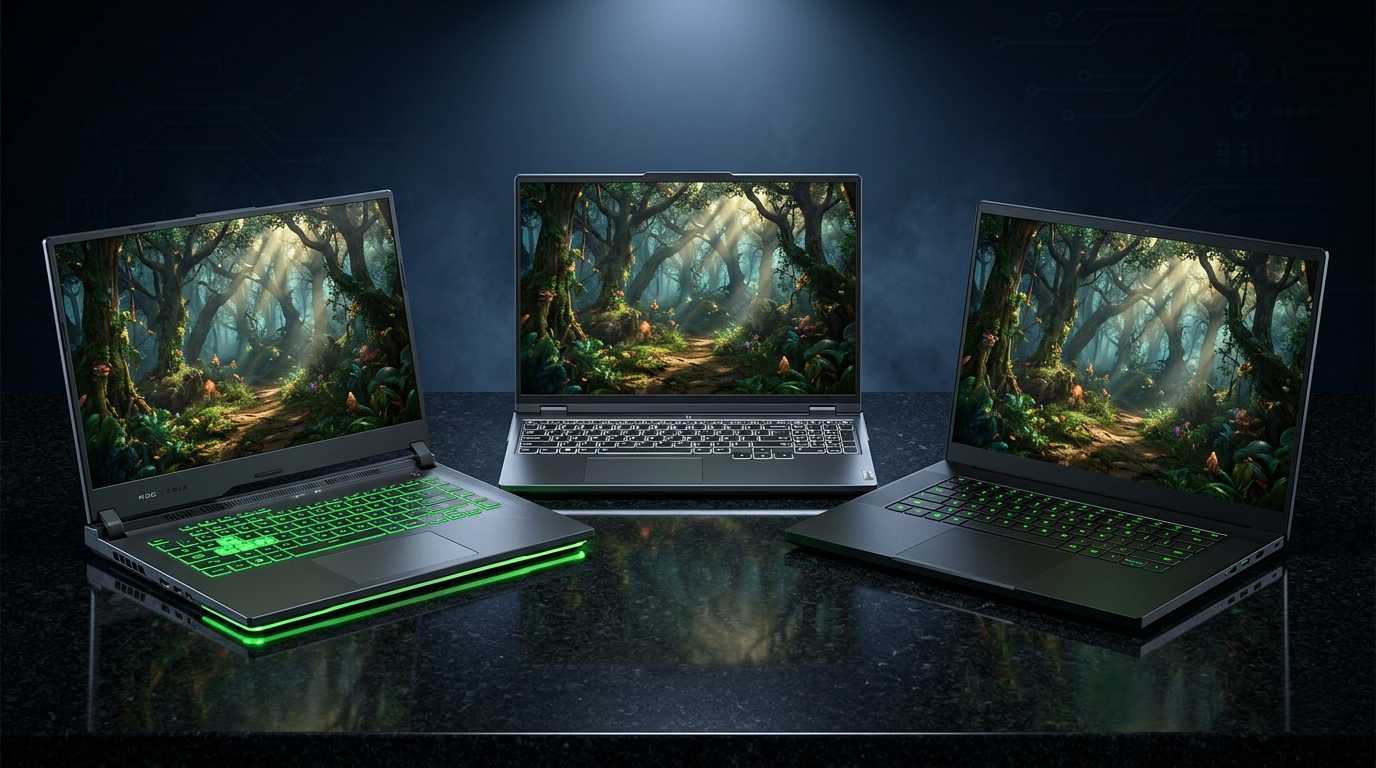
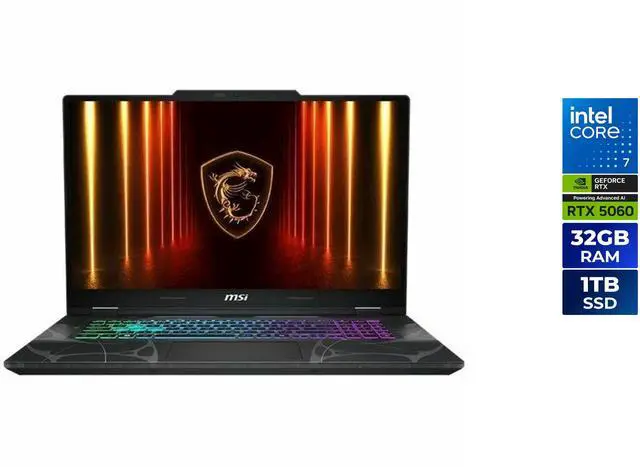
Three names define the premium gaming laptop conversation in 2026: ASUS ROG Strix, Lenovo Legion Pro 5i, and Razer Blade. Each brand has cultivated a devoted following built on distinct design philosophies, software ecosystems, and engineering priorities. With a new wave of gaming laptop hardware arriving and AI-accelerated workloads becoming a standard part of the portable computing conversation, the differences between these three contenders have sharpened considerably. If you’re deciding where to invest in a premium gaming portable this year, this is the comparison you need.
Design Philosophy: Three Different Visions of Gaming
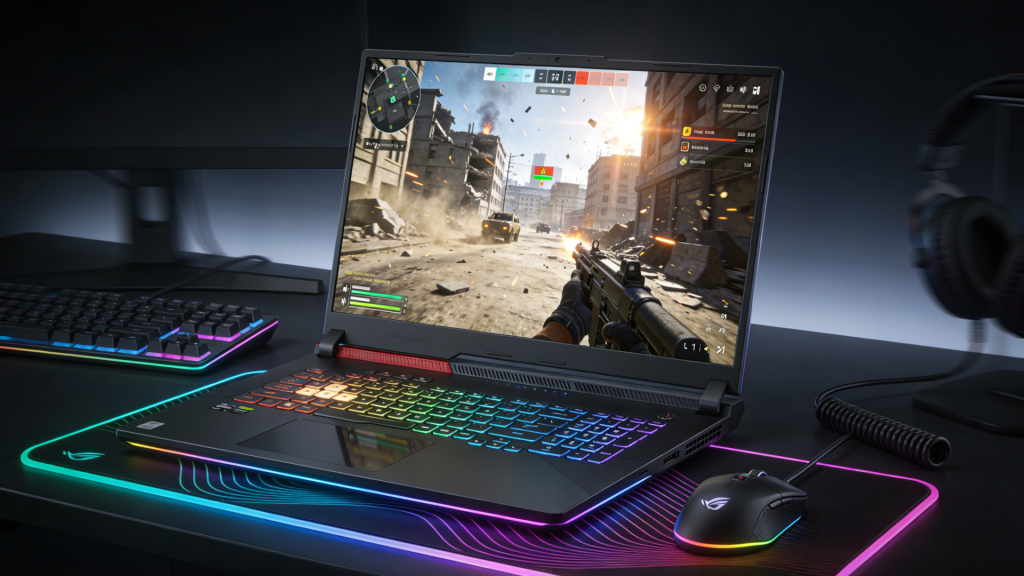
ASUS ROG Strix has long represented the maximalist approach to gaming laptop aesthetics. The ROG Strix G18 and G16 lines feature aggressive angular chassis designs, prominent ROG logo illumination, per-key RGB keyboards, and large ventilation grilles that leave no ambiguity about their purpose. The Strix aesthetic is unashamedly gaming-centric — you know exactly what this machine is before you open the lid.
Lenovo Legion Pro 5i takes a more restrained design direction. The Legion Pro 5i features a quieter chassis aesthetic with subtle branding, cleaner lines, and a design that reads as professional in a meeting room context without sacrificing gaming credentials. The white-zone keyboard illumination and conservative Legion Y-logo lighting give it a dual-identity that appeals to buyers who game heavily but don’t want hardware that announces itself as exclusively a gaming device.
Razer Blade is the design leader in the category by consensus. The Blade 16 and Blade 18 feature CNC-machined aluminum unibody chassis, minimalist Razer serpent logos with subtle backlighting, and a fit-and-finish quality that competes with premium productivity ultrabooks. Razer’s commitment to aesthetics comes at a cost in thermal headroom — the thinner chassis constrains cooling design — but for buyers who want gaming performance wrapped in a device that looks equally at home in a corporate office or a gaming tournament, the Blade remains unmatched.
Whichever direction you lean, Newegg’s Gaming Laptop Finder lets you filter by brand, GPU tier, display type, and chassis format to narrow your search efficiently.
 Gaming Performance: Sustained Power Under Load
Raw benchmark numbers only tell part of the gaming laptop story. Sustained performance under extended gaming sessions — where thermal management determines whether peak speeds hold or collapse — separates genuinely capable gaming portables from machines that impress in 5-minute benchmark runs and throttle during 3-hour sessions.
| Specification | ROG Strix G18 (RTX 4070) | Legion Pro 5i Gen 9 (RTX 4070) | Razer Blade 16 (RTX 4070) |
|---|---|---|---|
| GPU TGP (Max) | 140W | 140W | 115W |
| Display | 18″ QHD+ 240Hz | 16″ WQXGA 240Hz | 16″ OLED 240Hz |
| Cooling System | Tri-fan + vapor chamber | Coldfront 5.0 dual-fan | Vapor chamber |
| Chassis Thickness | ~26mm | ~24mm | ~18mm |
| Battery Capacity | 90 Wh | 99.9 Wh | 95.2 Wh |
| Build Material | Plastic/ABS hybrid | Aluminum + plastic | CNC aluminum unibody |
The ROG Strix G18’s larger chassis and tri-fan cooling system allow it to sustain 140W GPU TGP more consistently than its competitors, translating to genuinely higher average frame rates over long gaming sessions. If maximum sustained performance is the primary objective, the Strix’s thermal advantage is real and measurable.
The Legion Pro 5i Gen 9 matches the Strix on paper TGP with Lenovo’s Coldfront 5.0 dual-fan system, and in practice sustains performance within 5–8% of the Strix across most demanding titles. The trade-off is a slightly thinner chassis that demands the cooling system work harder. Lenovo’s engineering here is impressive — the Legion Pro 5i delivers Strix-competitive performance in a more compact form factor.
The Razer Blade 16 accepts a lower TGP ceiling in exchange for its premium thin chassis. The 115W GPU TGP limit means the RTX 4070 in a Blade 16 delivers slightly less peak performance than in the Strix or Legion. However, for buyers whose gaming sessions are punctuated by content creation, productivity work, or mobile use cases where the Blade’s portability and premium build quality matter, the performance trade-off is a conscious and defensible choice.
Browse Intel Gaming Laptops on Newegg to explore all three brands’ current configurations across the performance spectrum.
 Display Quality: Where Razer Pulls Ahead
Display technology is one of the clearest brand differentiators in this comparison, and it’s where Razer Blade earns a significant advantage.
The Razer Blade 16’s OLED panel delivers true infinite contrast ratios, pixel-perfect black levels, and color accuracy that IPS-based displays cannot replicate. Playing visually atmospheric titles — open-world RPGs, horror games, cinematic narratives — on an OLED gaming laptop is a meaningfully different experience. The Blade’s OLED also benefits content creators who use the laptop for photo and video editing alongside gaming.
The ROG Strix G18’s QHD+ 240Hz IPS panel is excellent by IPS standards, with strong peak brightness and wide color gamut coverage. For competitive gaming, its high brightness advantage over OLED panels in brightly lit environments is a genuine practical benefit.
The Legion Pro 5i Gen 9’s WQXGA IPS panel sits between these extremes, delivering strong brightness, accurate color reproduction, and 240Hz refresh rate performance optimized for competitive gaming. Lenovo has been a consistent performer in gaming display calibration from the factory, and the Legion Pro 5i’s out-of-box color accuracy is notably strong.
To complement any of these displays with desktop peripherals, explore Gaming Monitors on Newegg, or consider a 4K Gaming Monitor for a dual-monitor setup when docked at home.
 Software Ecosystem and AI Features
All three brands have invested in software platforms that extend hardware capabilities, and the differences reflect their distinct buyer focus areas.
ASUS Armoury Crate provides granular control over GPU TGP, fan curves, display overdrive, and per-application performance profiles. Its AI-powered performance optimization system adjusts GPU and CPU behavior based on detected workload patterns. For enthusiast users who want maximum hardware control, Armoury Crate’s depth is unrivaled in this category.
Lenovo Vantage is notably cleaner and less overwhelming than competing software platforms. The Legion AI Engine feature adjusts thermal profiles and power delivery in real time based on workload type — gaming, creator, and hybrid modes each tune the hardware differently. For buyers who want intelligent performance optimization without diving into manual tuning, Lenovo’s approach is genuinely excellent.
Razer Synapse focuses on peripheral ecosystem integration and profile management, with a clean interface that connects gaming mice, keyboards, and headsets into unified lighting and macro control. For buyers who are already invested in the Razer peripheral ecosystem, Synapse’s seamless integration is a compelling quality-of-life advantage. Complete your setup with a Gaming Headset, Gaming Mouse, or PC Game Controller to maximize your full gaming setup.
 The Verdict: Choose Based on Your Priority
Each brand wins in a different scenario, and the honest answer is that all three are excellent products that serve different buyer profiles.
Choose ROG Strix if maximum sustained gaming performance, a large 18-inch display, and enthusiast-level hardware control are your primary criteria. The Strix is the performance leader in demanding games at high refresh rates.
Choose Legion Pro 5i if you want Strix-class performance in a cleaner, slightly more portable chassis with an excellent keyboard, strong battery life, and software that stays out of your way. The Legion Pro 5i is the balanced-choice winner for most serious gamers.
Choose Razer Blade if premium build quality, OLED display excellence, and a device that looks as sophisticated in a professional environment as a gaming one are worth the thermal trade-off. The Blade is the premium lifestyle choice.
Use Newegg’s Gaming PC Finder to compare all three brands side by side and find the exact configuration that matches your gaming lifestyle.
Related Posts
- Best Gaming Notebooks Under $1000 in 2026
- Best Gaming Laptops Under $1500 in 2026: Power Without Breaking the Bank
- How to Set Up a New Laptop After Unboxing: A Step-by-Step Guide
- What Should I Do After Buying a New Laptop? The Smart Owner’s Checklist
- RTX 4070 Laptop vs. AMD RX 7700S: Which Gaming GPU Delivers Better Value in 2026?