If you’ve tried to buy RAM recently, you may have noticed something surprising: DDR5 prices are significantly higher than they were just a year ago. At the same time, the performance ceiling of consumer memory keeps climbing, with new speed tiers pushing past DDR5-9000 and beyond. Understanding both trends will help you shop smarter.
Why DDR5 Prices Surged in 2026
The DDR5 memory market in 2026 is not behaving the way most buyers expected. In mid-2025, DDR5 pricing hit a low point that made upgrading feel affordable. Since then, however, prices have reversed sharply.
The driving force is AI infrastructure demand. Cloud service providers and data centers are racing to build high-performance computing platforms for AI workloads, and server DRAM shares manufacturing capacity with consumer DDR5. Global server shipments are projected to grow around 4% annually, but AI-focused buildouts are absorbing capacity at an accelerated rate. Manufacturers have responded by allocating more production to higher-margin server DRAM, squeezing availability on the consumer side.
The numbers reflect this clearly. A 32 GB DDR5-6000 kit that cost around $80 in mid-2025 reached approximately $432 by early 2026 — an increase of more than 400% in under a year. In Europe, price tracking data showed month-over-month growth finally flattening by late January 2026, suggesting the steepest part of the surge may be over. Some segments, like 64 GB DDR5-6000 kits, even saw a brief 15% price correction in January. However, industry analysts expect DDR5 profitability to remain elevated throughout 2026, meaning meaningful price relief is likely still months away.
If you’re watching prices and waiting for the right entry point, Newegg’s new memory releases page is a useful place to track what’s coming to market and spot any temporary deals.
 The DDR4-to-DDR5 Transition: Where Things Stand
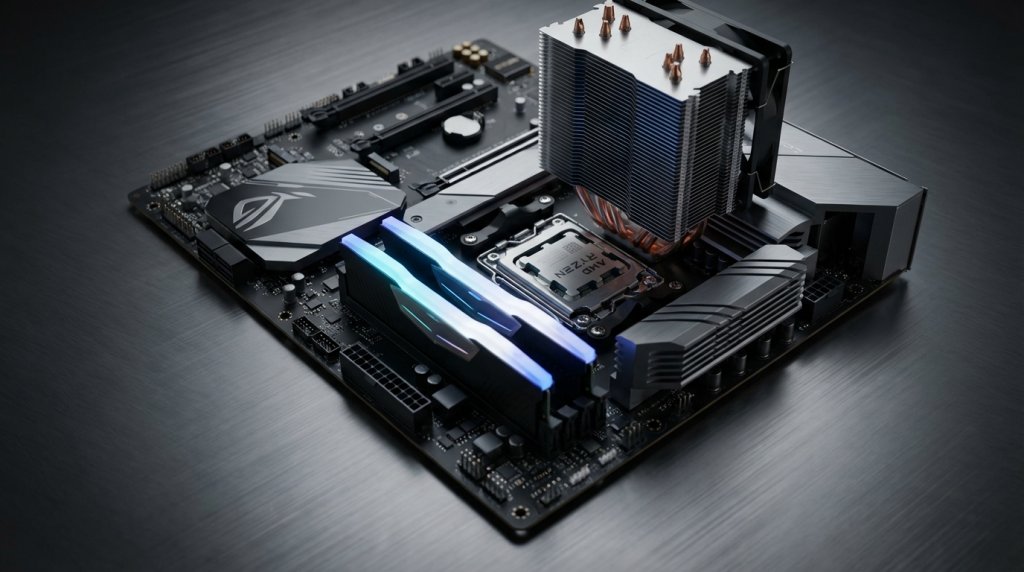
Despite the pricing pressure, DDR5 has firmly established itself as the standard for new builds in 2026. Both AMD’s Ryzen 9000 series (AM5 platform) and Intel’s Core Ultra 200 series (LGA1851 platform) require DDR5. There is no DDR4 support on either current-generation platform.
This means anyone buying a new desktop today is buying into DDR5 by default. The transition that began with Intel’s Alder Lake in late 2021 is now essentially complete at the consumer level. DDR4 remains relevant only for buyers maintaining older AM4 or LGA1700 builds — and even there, the upgrade path eventually leads to DDR5 when a platform refresh becomes necessary.
For buyers unsure which memory type or speed their motherboard supports, Newegg’s Memory Finder tool makes compatibility checks straightforward. Enter your motherboard or system model and it returns a curated list of compatible modules.
 DDR5 Speed Tiers: From Baseline to Extreme
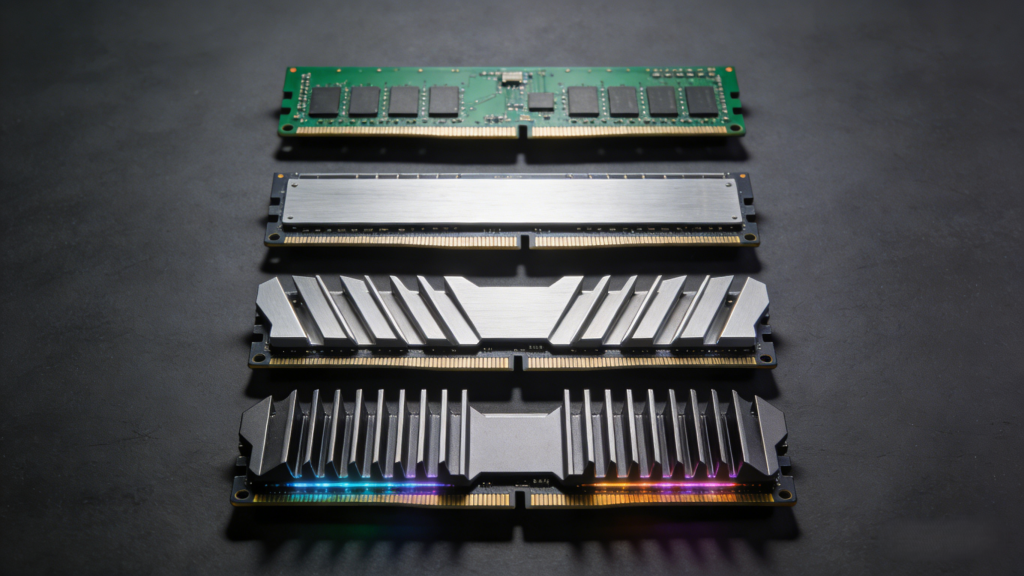
One area where the DDR5 story is unambiguously positive is performance. The range of available speeds in 2026 spans from baseline DDR5-4800 all the way to DDR5-9600 and above at the enthusiast tier.
Here is how the speed landscape breaks down for practical decision-making:
DDR5-4800 to DDR5-5600 — Entry Level
These speeds meet the DDR5 standard and work on all compatible platforms. They suit budget builds, office workloads, and systems where memory bandwidth is not a bottleneck. Performance differences compared to faster kits are minimal in most everyday tasks.
DDR5-6000 to DDR5-6400 — The Sweet Spot
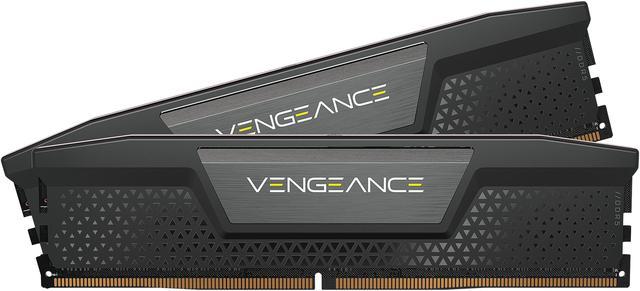
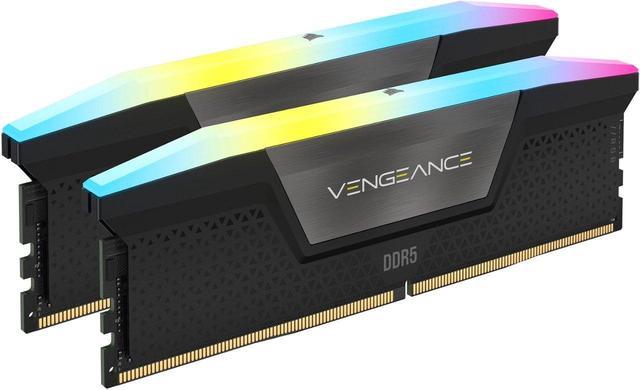
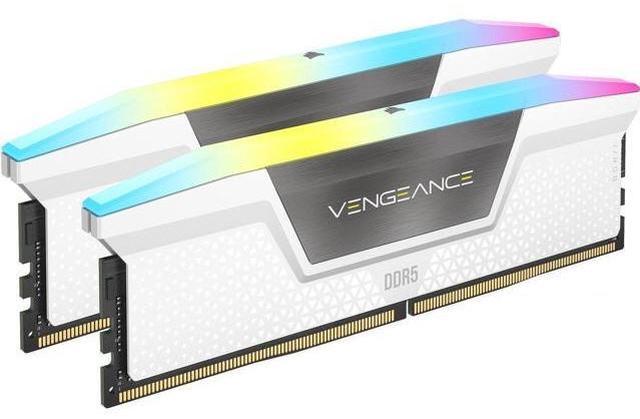
This range has consistently delivered the best performance-per-dollar for gaming and productivity builds. DDR5-6000 in particular is widely recommended for AMD Ryzen platforms, where the memory controller’s Infinity Fabric clock aligns well at this speed for optimal latency. Corsair’s Vengeance DDR5-6000 CL28 is a strong example: aggressive timings combined with dual-platform support for both AMD EXPO and Intel XMP profiles.
DDR5-6800 to DDR5-7600 — High Performance
Kits in this range target enthusiast builders who want maximum throughput for video editing, large dataset processing, and memory-bandwidth-sensitive creative applications. Pricing at this tier has also been affected by the 2026 supply crunch, making value comparisons against the DDR5-6000 tier worthwhile before committing.
DDR5-8000 and Above — Extreme Overclocking
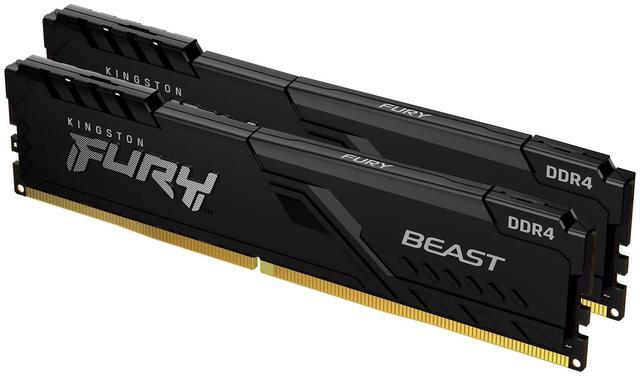
At the top end, brands like Patriot (Viper Xtreme 5) and Kingston (Fury Renegade) have pushed DDR5 kits to 9600 MT/s and beyond. These modules use hand-selected DRAM ICs, reinforced PCBs, and precision-engineered voltage management for stability at extreme settings. They require high-end motherboards with robust memory subsystems and are not guaranteed to reach rated speeds on every platform.
Explore the full range of desktop memory on Newegg to compare speed tiers, brand options, and current pricing across the entire DDR5 spectrum.
 Capacity: How Much RAM Do You Actually Need in 2026?
Memory capacity recommendations have shifted upward over the past two years, largely driven by the same AI and software trends affecting the broader market.
16 GB is no longer the universal baseline it once was. It remains adequate for light gaming and basic productivity, but modern AAA games and AI-enhanced creative software increasingly push against this ceiling.
32 GB is the new standard recommendation for gaming builds and general-purpose workstations. It provides comfortable headroom for multitasking: gaming while streaming, running a browser with dozens of tabs open, or working across multiple creative applications simultaneously.
64 GB is increasingly justified for content creators, software developers running multiple virtual machines, and professionals using AI-assisted tools locally. The 2026 category of prosumer AI applications — local LLM inference, AI-assisted video editing, and generative design tools — can genuinely make use of 64 GB under heavy workloads.
 Making the Right Decision Now
Given the current pricing environment, the best strategy depends on your timeline. If you need memory today, DDR5-6000 kits represent the most practical choice: strong real-world performance, broad platform compatibility, and slightly better availability than extreme-speed tiers.
If your build can wait, monitoring the supply situation over the coming months makes sense. The stabilization signals appearing in European markets in early 2026 suggest that prices may soften during the latter half of the year as production adjustments take effect.
Either way, checking current stock and pricing through Newegg’s desktop memory section will give you a real-time view of what competing brands are offering at each speed tier.
Related Posts
- Gaming RAM in 2026: XMP 3.0, AMD EXPO, and How to Choose Your Kit
- Unveiling JEDEC’s LPDDR6 – Boosting Mobile & AI Memory Performance
- What type of RAM is best for PC gaming? DDR types explained
- 7800X3D vs 7700X3D: Which X3D Gaming Chip Should You Buy Now?
- Ryzen 7 7700X3D vs 7700X, 9600X, Core Ultra 7 265K & i7-14700K: Which Gaming CPU Wins?