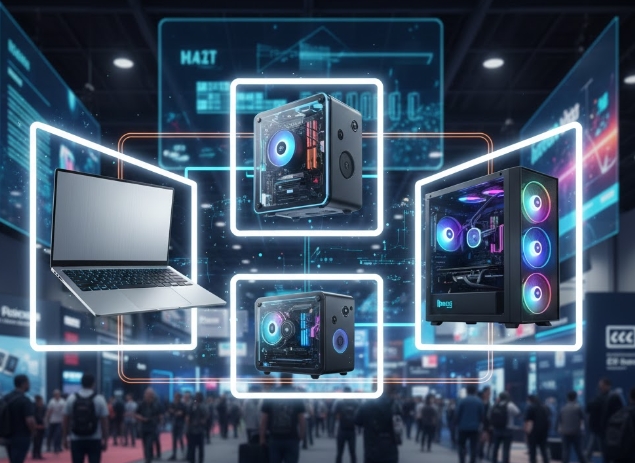
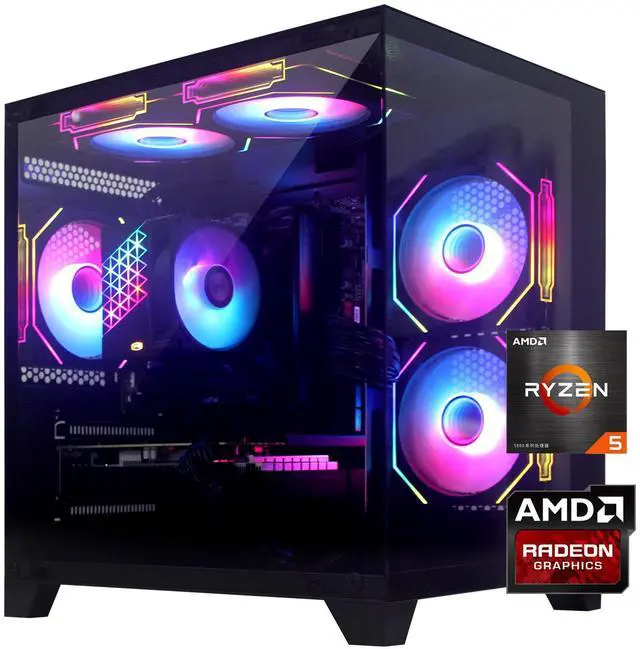
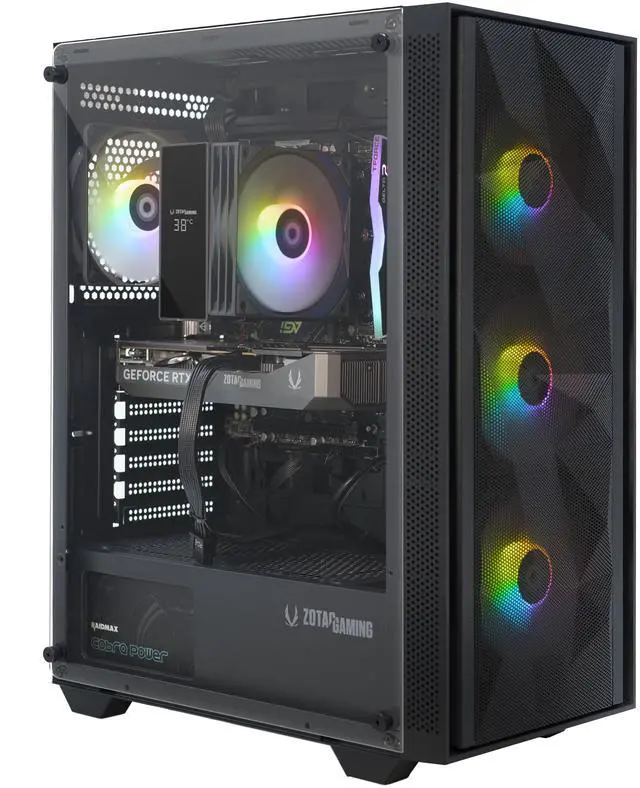
CES 2026 didn’t just bring faster laptops and bigger GPUs. It marked a clear shift in what “next-gen PC” means: local AI capability is now the headline feature. Across the show floor, the core competition wasn’t only about CPU cores or GPU shaders—it was about how OEMs are packaging on-device AI acceleration into real products that creators and developers can actually use.

The Big Story at CES 2026: NPUs Become the New Baseline
A year ago, NPUs were a “nice-to-have.” At CES 2026, they’re a requirement.
That’s because modern AI workloads are increasingly local, persistent, and multi-app. You’re not just using AI for one task. You’re running:
- always-on copilots and assistants
- real-time audio cleanup and transcription
- background summarization and “context” tools
- local inference for private workflows
- creative pipelines that chain AI tools together
In practice, the best AI PCs at CES 2026 leaned into a two-engine idea:
- NPU handles always-on, power-efficient AI (voice, camera, OS-level assist, light inference).
- GPU handles heavy lifting (image generation, video AI, larger local models, compute-dense tasks).
This is why the AI PC story in 2026 feels different: it’s not a feature list—it’s a system design philosophy.
Intel: Core Ultra Series 3 “Panther Lake” Drives the x86 AI Laptop Wave
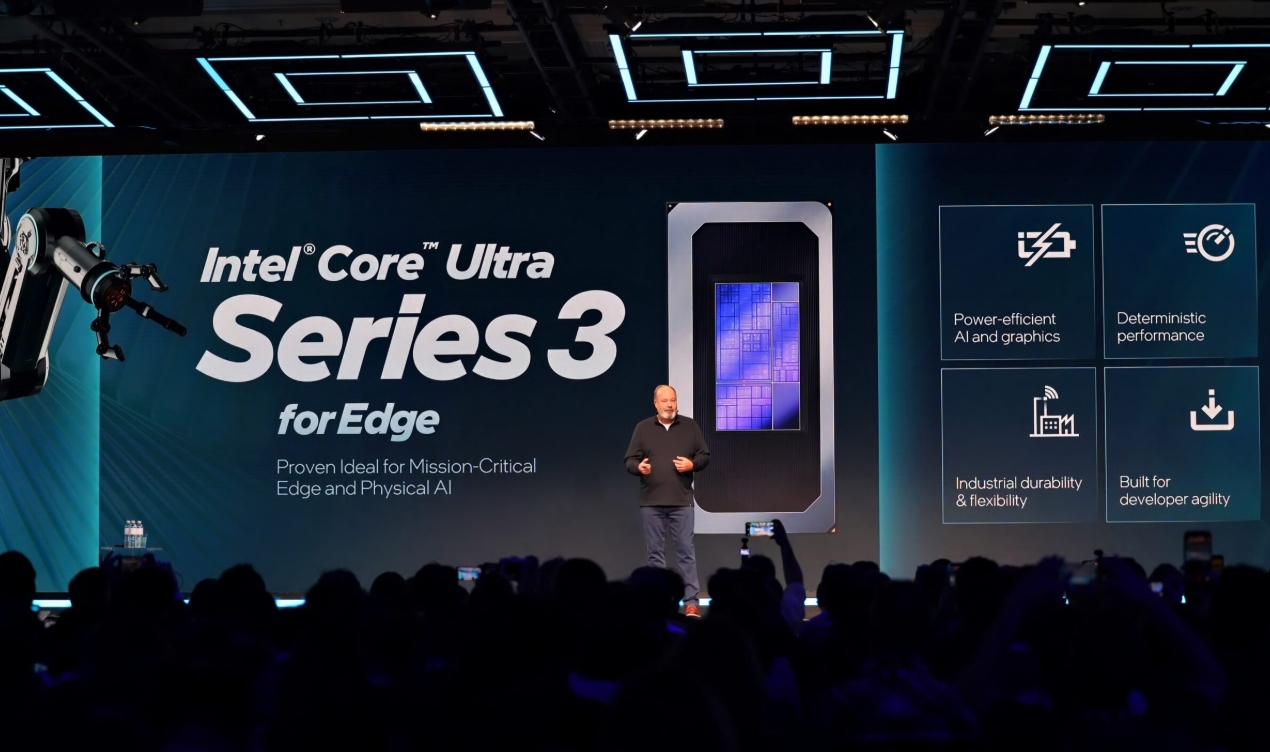
Intel’s CES 2026 narrative centered on Core Ultra Series 3 (“Panther Lake”), positioned as a major step forward for AI laptops with an NPU rated at 50 TOPS and Arc graphics integrated into the platform.
The reason Intel matters in this story is scale. Reports from CES coverage noted Intel expects the Core Ultra Series 3 platform to power 200+ laptop designs from OEMs. That matters to shoppers because it means the “AI laptop baseline” will quickly move from niche premium units to mainstream, across multiple brands.
Why creators and developers should care
Intel’s platform direction is all about efficient local AI:
- More AI tasks can stay on device without becoming a battery drain.
- More laptops can run “assistive” AI features continuously.
- More thin-and-light systems can remain responsive while doing AI in the background.
From a workflow point of view, these are the devices most likely to handle:
- live transcription + translation
- intelligent camera effects
- background noise cleanup
- summarization inside productivity apps
- lightweight local inference (and hybrid cloud + local flows)
AMD: Ryzen AI Expands Local AI Beyond “Premium Only”
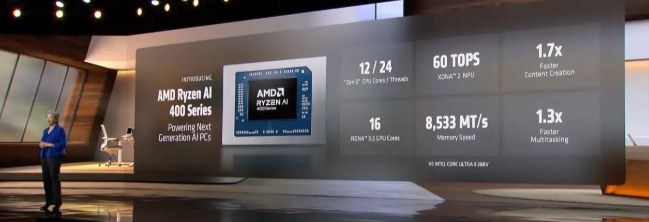
AMD’s CES 2026 message leaned into Ryzen AI as the bridge between creator performance and local intelligence—especially for users who want strong CPU performance while still gaining on-device AI acceleration.
While a lot of CES talk revolves around TOPS, AMD’s practical advantage tends to be balanced compute + memory behavior. For many creators and devs, the “AI PC” win isn’t peak bursts—it’s how the system behaves under real, mixed workloads:
- editing + browser + AI tools + IDEs
- long sessions with sustained compute
- multi-app collaboration while AI features remain active
This is one reason AMD-based AI PCs keep showing up in “serious work” categories—systems meant to remain stable while you run multiple demanding tools at once.
NVIDIA: DLSS 4.5 Proves the GPU Is an AI Engine (Even Outside “AI Apps”)
NVIDIA’s CES 2026 AI story wasn’t “here’s an NPU.” It was: the GPU is already the dominant AI accelerator—and NVIDIA is using AI to rewrite the graphics pipeline itself.
The headline: DLSS 4.5 and its new Multi-Frame Generation approach, which NVIDIA describes as enabling up to 6× frame generation by generating multiple intermediate frames using AI.
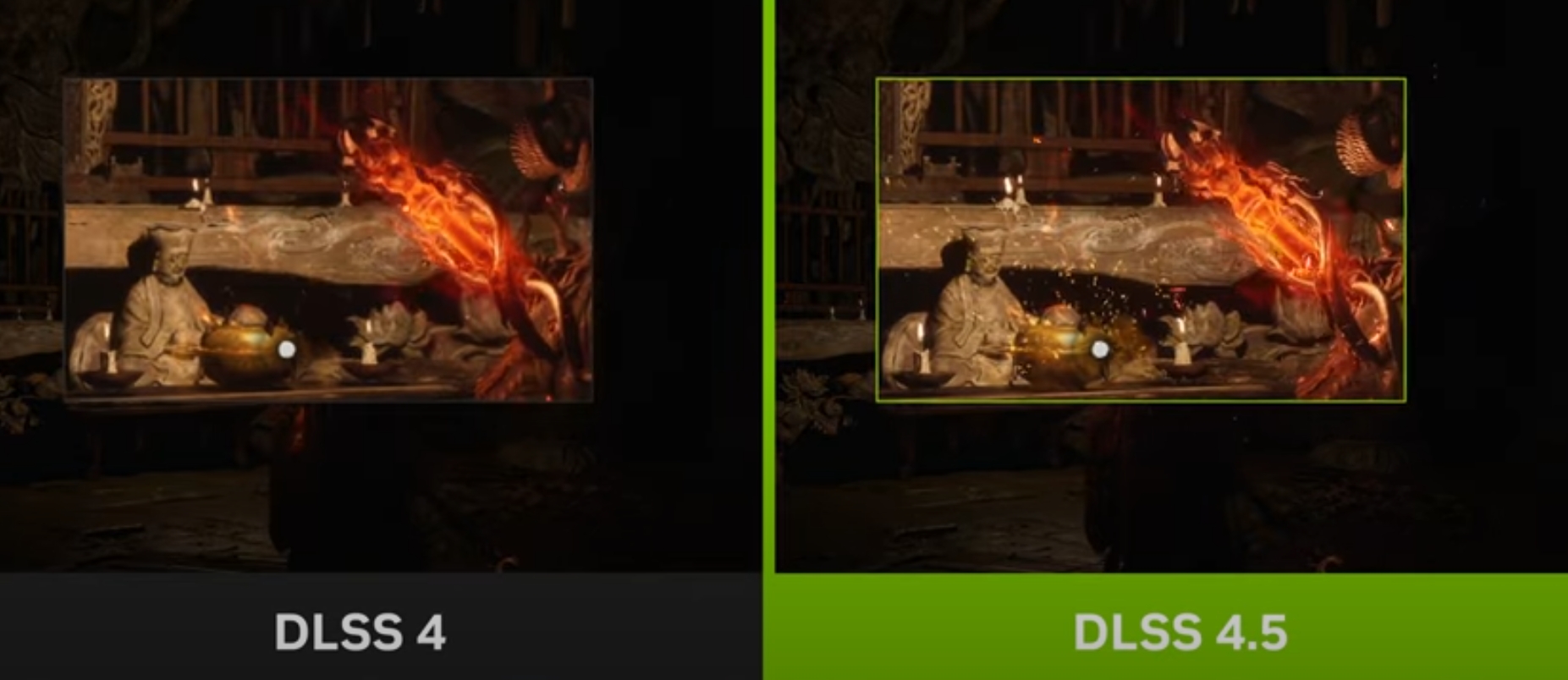
For Newegg’s audience, this matters for two reasons:
- Gaming performance becomes AI-defined.
Even if you never touch a local model, your “AI PC” benefits because AI is producing visual performance gains. - The same GPUs powering DLSS also accelerate creation.
The GPU that makes games look smoother is also the engine behind:- generative image workflows
- video enhancement
- local inference tools
- AI-accelerated creative pipelines
In other words: for many buyers, a GPU upgrade is now an AI upgrade, whether you planned it or not.
Qualcomm: Snapdragon X2 Makes ARM PCs a Real Player in Local AI
Qualcomm’s Snapdragon X2 push is one of the clearest examples of CES 2026’s NPU-first identity.
Qualcomm positions Snapdragon X2 around an 80 TOPS NPU, framing it as a key pillar for Copilot+ class experiences and concurrent AI workflows.
The bigger story is what ARM-based AI laptops are trying to become:
- highly efficient
- always-on AI capable
- mobile-first, battery-forward
- increasingly mainstream in Windows laptops
Coverage also points to OEM momentum (multiple Snapdragon X2 Elite laptops were announced around CES), signaling broader adoption of Windows on ARM in the AI PC era.
What this means for AI creators/devs
Qualcomm’s best fit is clear:
- mobile professionals who want AI features all day
- creators doing lighter AI workflows (writing, planning, productivity AI)
- devs who prioritize battery, portability, and hybrid workflows
ARM AI laptops are not trying to replace max-GPU desktops. They’re trying to make local AI feel native in daily computing.
OEM Spotlight: How MSI, ASUS, Gigabyte, and ASRock Built Around Local AI
CES 2026 wasn’t only about chip vendors. The real story is how OEMs are shaping AI PCs into categories that match real users.
MSI: Portable AI Workstations That Treat AI as a Daily Workload
MSI’s CES 2026 strategy can be summarized as:
Build laptops that can sustain AI + performance workloads without becoming bulky.
The best example is the MSI Stealth 16 AI+, which was recognized as a CES Innovation Awards honoree and positioned as a thin performance laptop built around Intel Panther Lake + RTX 50 series GPUs, with “over 1900 TOPS” claimed and Copilot+ readiness highlighted.
What’s important here isn’t only the number. It’s what MSI is signaling:
- AI laptops are now tuned for sustained mixed workloads.
- NPU + GPU collaboration is becoming the default performance stack.
- Thin designs aren’t “light duty” anymore—they’re expected to handle real compute.
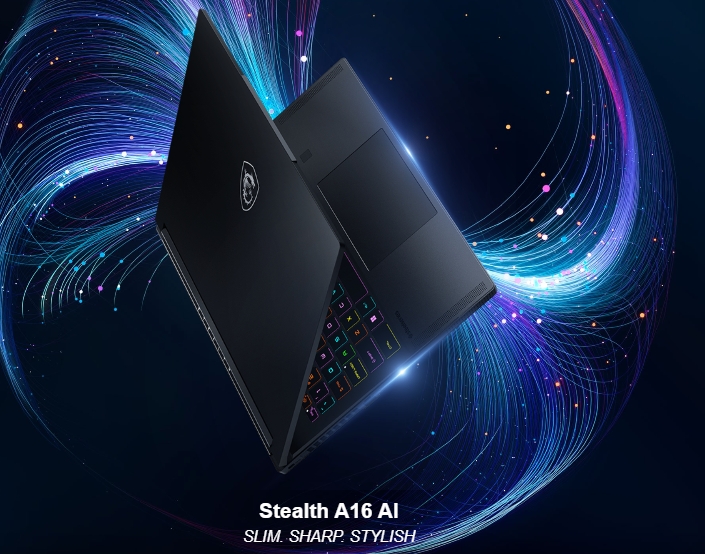
Why this matters to buyers
For AI creators and developers, MSI’s positioning maps to reality:
- you want portability
- but you still need performance headroom
- and you need stability (cooling, power behavior, consistent speed)
MSI’s message at CES: AI laptops should be work-ready, not just “AI branded.”
ASUS: Form Factors Built for AI Multitasking (Not Just Faster Specs)
ASUS stood out by making the AI PC story visual. Dual-screen concepts and productivity-first designs reflect a truth about modern AI workflows:
AI work is inherently multi-window and context-heavy.
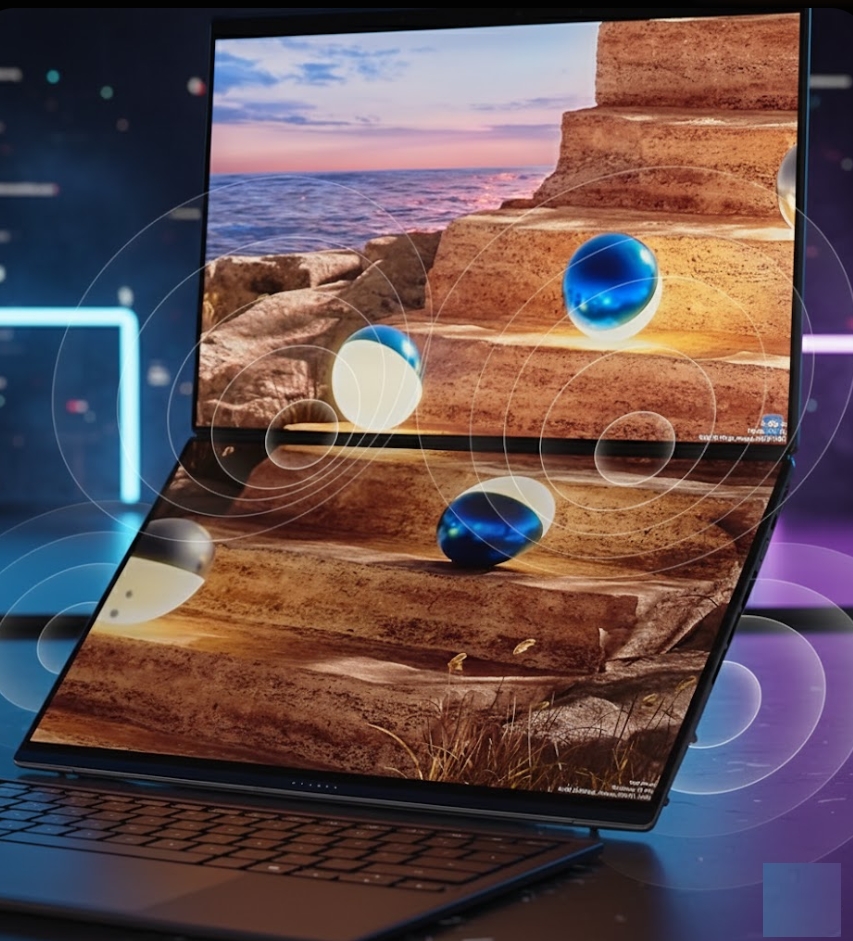
Windows Central’s CES coverage highlighted ASUS in the 2-in-1 category with dual-screen devices, reinforcing ASUS’s identity as a form-factor innovator.
The practical reason this matters:
- AI assistants are often used alongside editing, research, chat, and tools.
- A larger workspace makes AI more usable, not less.
- Modern creator workflows rarely live in one window anymore.
What ASUS is signaling
ASUS isn’t only selling performance. It’s selling AI-ready workspace design:
- more screen real estate
- more flexible modes
- better multitasking ergonomics
If AI is becoming an always-open tool, ASUS is designing PCs that make “always-open AI” feel natural.
Gigabyte: “AI TOP” and the Local AI Infrastructure Mindset
Gigabyte’s CES story is a different angle: local AI as infrastructure, not only as a laptop feature.
Gigabyte’s official CES 2026 messaging showcased the AI TOP series and explicitly spotlighted AI TOP ATOM, described as a personal AI supercomputer for local AI prototyping, fine-tuning, and inference—powered by NVIDIA’s Grace Blackwell superchip, with claims of 1 petaFLOP FP4 AI performance and support for very large model sizes.
Even if most consumers won’t buy a “personal supercomputer,” Gigabyte’s presence matters because it highlights a real market shift:
- AI is moving from cloud dependence to local ownership.
- creators and developers want privacy and cost control.
- local AI capabilities expand into new desktop categories.
Why Newegg shoppers should care
Gigabyte’s AI TOP narrative reinforces a pattern:
- AI PCs aren’t only “consumer laptops.”
- They’re also the foundation for local labs, creator workstations, and small-team AI stacks.
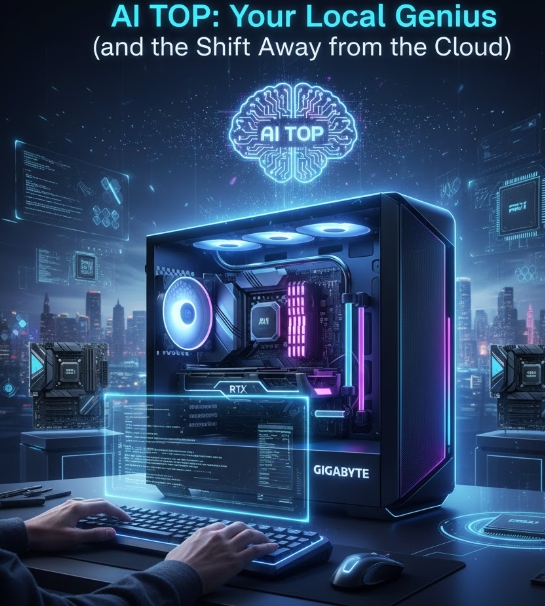
Gigabyte is positioning itself as an ecosystem player: hardware, systems, and a roadmap built around local AI adoption.
ASRock: Mini PCs and Platforms That Make AI Modular
ASRock’s CES 2026 approach is proof that AI computing isn’t only for towers.
ASRock introduced compact systems that explicitly focus on local AI acceleration, including Intel Core Ultra Series 3-based mini PCs, bringing AI-ready compute into small form factors.
This matters because many modern AI workflows can be modular:
- a small node for always-on inference
- a home lab unit
- an edge PC for automation
- a compact dev environment
In short: AI PCs don’t have to be big. They have to be capable.
ASRock is leaning into the idea that local AI can be distributed across systems—not just locked to one workstation.
What CES 2026 Means for AI Creators and AI Developers
CES 2026 confirms that AI capability is becoming a first-class purchase decision.
The new “AI PC stack” looks like this:
- NPU = always-on AI features + efficient background acceleration
- GPU = heavy AI compute + creative acceleration + AI graphics pipelines
- CPU + memory + storage = the workflow foundation that keeps everything smooth
And OEMs are already designing around that stack:
- MSI focuses on portable sustained AI performance.
- ASUS focuses on AI-first workspace and multitasking form factors.
- Gigabyte pushes local AI ecosystems and “AI infrastructure on your desk.”
- ASRock pushes compact systems and builder platforms that bring AI to smaller devices.
Newegg Take: How to Shop AI PCs Without Getting Lost in Hype
If CES 2026 taught us anything, it’s that the label “AI PC” will soon apply to almost everything.
So the best shopping mindset is not “Which AI PC is best?”
It’s: Which AI capability matches your workflow?
Use case quick guide
- AI creators (image/video pipelines): prioritize GPU + cooling stability, then storage
- AI developers (local assistants + tooling): prioritize balanced CPU/NPU + RAM + fast storage
- Mobile AI professionals: prioritize NPU-first laptops for all-day AI features
- Local AI builders: look at modular setups, mini PCs, and upgrade paths
Build Your 2026 Local AI Setup with Newegg
CES 2026 proved the AI PC era isn’t coming—it’s here.
If you’re planning an upgrade, start with the workflows you want to run locally:
- copilots that stay private
- creative generation pipelines
- AI-assisted editing
- dev toolchains that stay responsive
- small labs and edge nodes
Newegg makes it easy to compare AI-ready laptops, desktops, mini PCs, GPUs, and core components side by side—so you can build a setup that fits your work today and scales with the models of tomorrow.
Related Posts
- Unveiling JEDEC’s LPDDR6 – Boosting Mobile & AI Memory Performance
- Sales Tax Holiday 2026: Save on PC Components, Peripherals, Laptops, Desktops, and Workstations at Newegg
- Apple Intelligence Features at WWDC 2026: The New Siri, Photo Editing, and What Your Device Needs
- Apple Parental Controls at WWDC 2026: The New Child Account Tools Explained
- iOS 27 Performance Boost: Every Speed and Design Change Apple Showed at WWDC 2026